
Glam Living Room Ideas – 20 Luxe Designs You Need to See Now
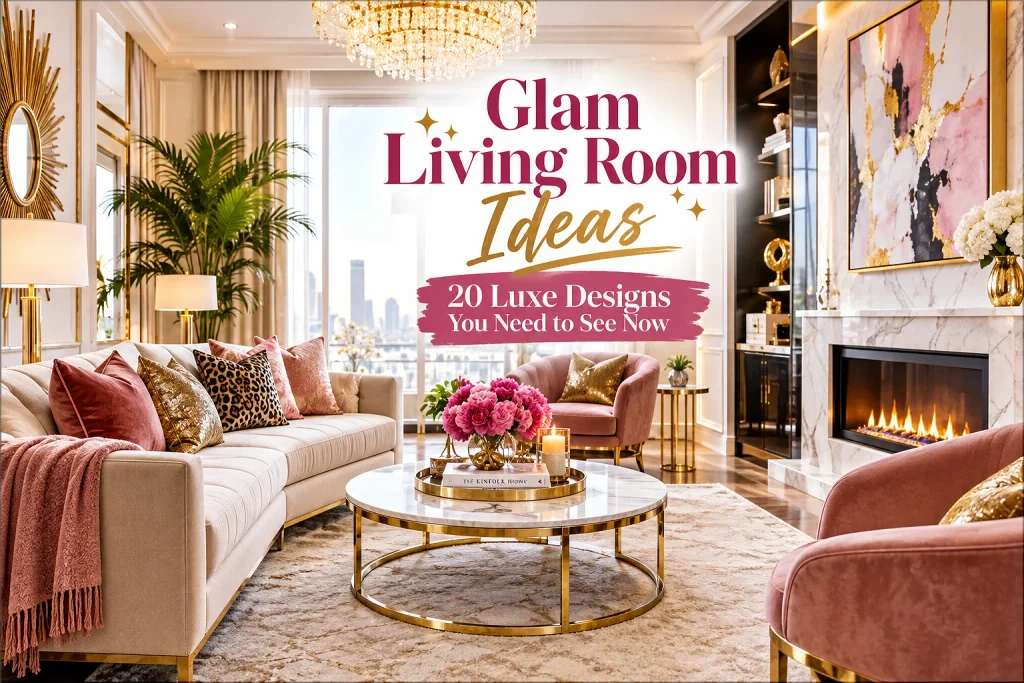
Introduction: What makes a living room feel glam without feeling staged?
The most successful glam living rooms balance visual richness with everyday comfort. Velvet, reflective metal, sculptural lighting, layered textiles, and art can make a room feel special, but the space still needs a clear seating plan, useful lighting, and finishes that suit how the household actually lives.
This guide uses that practical standard. The 20 designs below are intentionally different in both mood and color combination. Use each one as a complete direction or borrow one element, such as a brass table, arched mirror, or tailored lamp, for a smaller refresh.
A helpful way to plan is to choose one main color, one supporting neutral, and one metal or accent shade. Then test the palette in morning, afternoon, and evening light. Lighting deserves particular attention: a layered plan usually combines general, task, and accent light, while dimmers make the room easier to adapt through the day.3 For a typical living room, a warm white range around 2700K–3000K is a useful starting point, but the right choice depends on the bulbs, wall color, daylight, and personal preference.3
1. Jewel-Tone Emerald and Sapphire Glam

Palette: emerald green, sapphire blue, cream, and antique brass.
Style move: Make one deep velvet sofa the anchor, then repeat the secondary jewel tone in a chair, cushion, or artwork rather than spreading it across every surface.
This is a confident choice for a room that needs depth. The cream rug and curtains prevent the dark colors from becoming visually heavy, while brass adds warmth without competing with the saturated upholstery. Keep the coffee table simple and rounded so the room feels inviting instead of overly formal. If your space receives limited daylight, sample the wall color first; jewel tones can appear substantially darker in a north-facing room.
2. Soft Blush, Ivory, and Rose-Gold Curves

Palette: blush pink, warm ivory, pale taupe, and rose gold.
Style move: Use curved furniture and fluted texture to create softness instead of relying on many decorative accessories.
Blush works best here as a muted, dusty tone rather than a bright candy pink. Pair it with ivory upholstery and pale wood or champagne metal so the room remains mature. A curved sofa can make conversation areas feel more relaxed, but measure the room carefully before ordering: rounded pieces often have a larger footprint than their front view suggests. Add one large artwork instead of a busy gallery wall to preserve the quiet mood.
3. Moody Charcoal and Oxblood Cinema Lounge

Palette: charcoal, oxblood, black, smoked glass, and aged brass.
Style move: Treat lighting as architecture by layering picture lights, table lamps, and a low ambient source.
This palette suits evening entertaining and rooms with strong architectural features. Charcoal walls create a cocooning backdrop, while oxblood gives the sofa enough color to remain the focal point. Because dark rooms absorb light, use several low-glare sources rather than one harsh ceiling fixture. Add a lighter throw or rug if the room begins to feel flat. Before painting, inspect large samples in both daylight and lamplight; undertones can shift dramatically.
4. Coastal Champagne with Pale Aqua

Palette: champagne, sand, ivory, pale aqua, and polished nickel.
Style move: Use coastal references through texture and lightness, not literal nautical décor.
This version of glam feels breezy because the palette is light and the metal is reflective. Linen, glass, and a softly patterned rug add variation without visual noise. Pale aqua is most effective as a small repeated accent in cushions, artwork, and ceramics. For a practical family room, choose a performance upholstery or washable cover in the seating zone and reserve delicate decorative fabrics for pieces that are less likely to be touched.
5. High-Contrast Black-and-White Marble
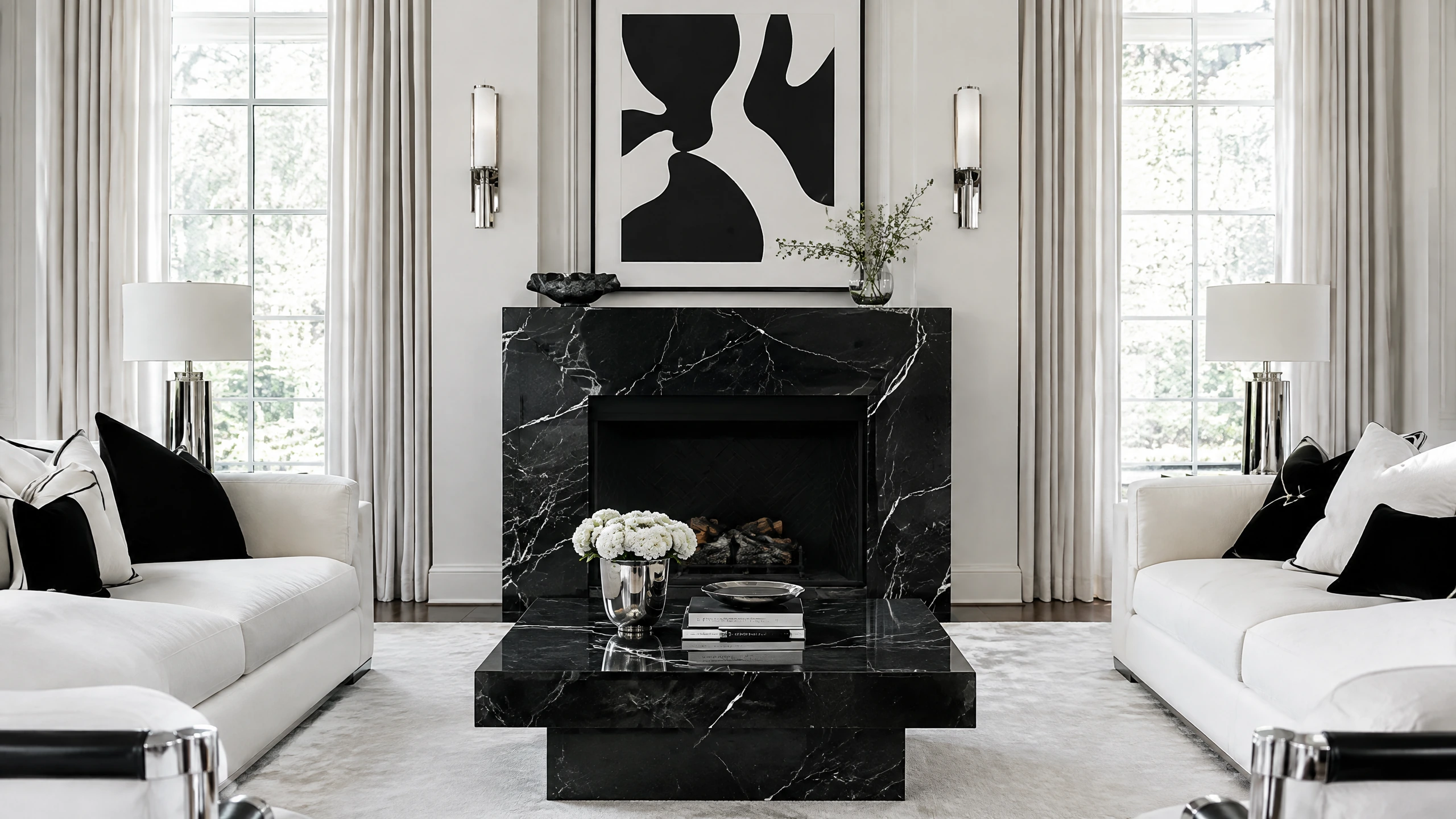
Palette: ivory, black, gray, chrome, and white.
Style move: Build the room around a strong axis, such as a fireplace or media wall, then soften the geometry with rounded seating.
Black and white can look exceptionally luxe because the contrast is clear and edited. The risk is making the room feel stark. Counter that with a textured rug, soft curtains, and an ivory sofa rather than a pure white one. Chrome works well when the room already has cool daylight; if the space feels cold, substitute a small amount of brass or warm wood. Use marble-look surfaces thoughtfully, because too many veined pieces can compete with the artwork.
6. Terracotta, Camel, and Terrazzo Mediterranean Glam

Palette: terracotta, camel, cream, walnut, and bronze.
Style move: Combine rounded upholstery with plaster-like texture and one graphic artwork for a collected, modern Mediterranean effect.
Warm earth tones make glam feel approachable. A caramel sofa brings richness, while terrazzo or stone introduces pattern through material rather than print. Keep the supporting furniture low and substantial so the room feels grounded. If you are decorating a rental, consider removable textured wallpaper or a limewash-effect paint instead of permanent plaster. Warm palettes can become too orange under warm bulbs, so compare fabric samples beside your intended lamp color.
7. Sage Green, Walnut, and Brushed Gold

Palette: sage, walnut, ivory, olive, and brushed gold.
Style move: Use vertical ribbed wood or slatted detail behind one focal area, then let the rest of the room stay quiet.
Sage is a forgiving glam color because it can read neutral when paired with warm wood. Brushed gold keeps the room polished but less flashy than mirror-finish metal. This scheme benefits from plants, woven textures, and artwork with pale green or stone tones. For a balanced layout, center the coffee table on the seating group rather than the wall; the room should support conversation, not only face the television.
8. Lavender and Pewter Apartment Glam
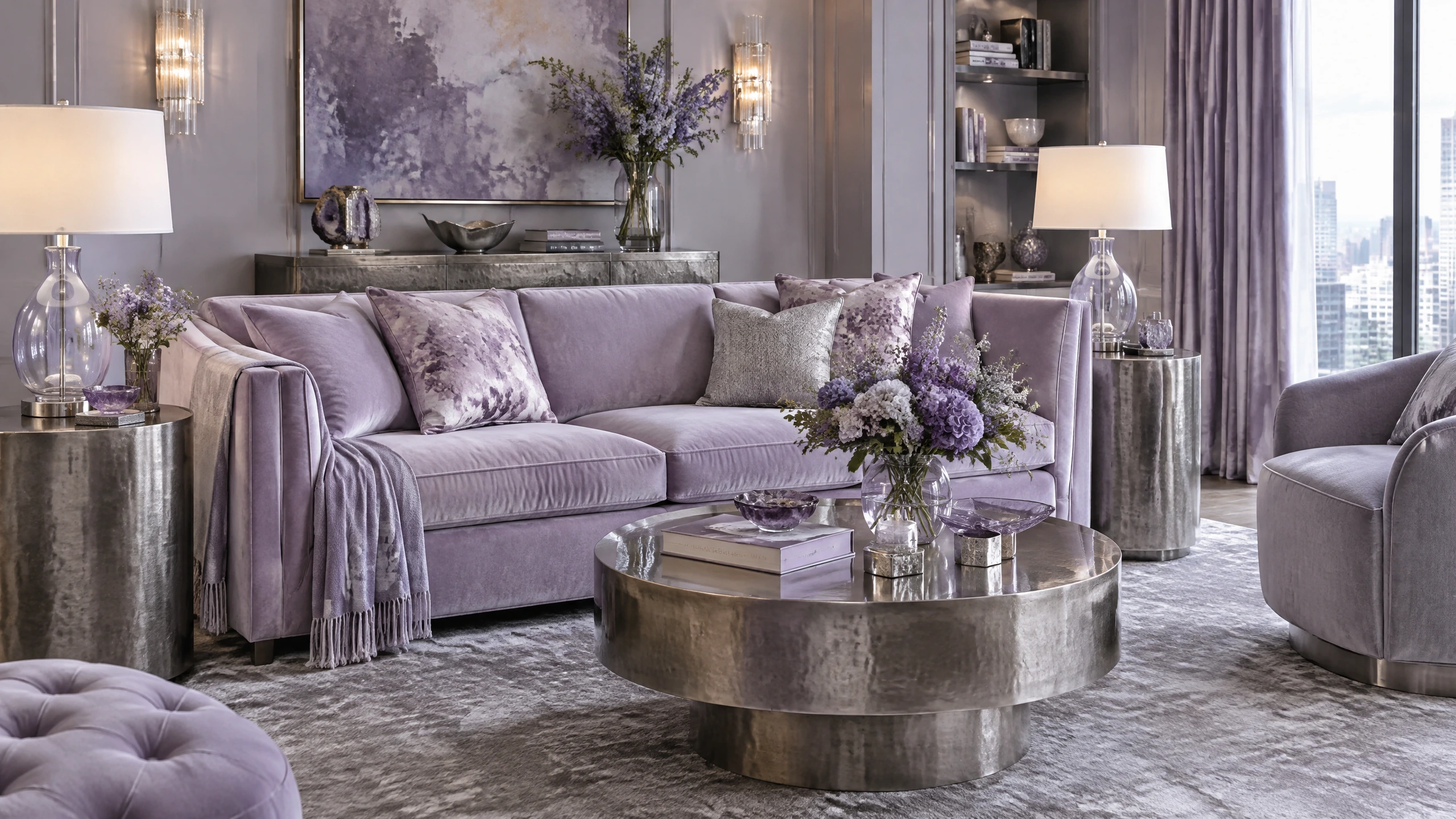
Palette: lavender, lilac, pewter, silver-gray, and soft white.
Style move: Repeat the purple family in different values, then use pewter for a controlled metallic note.
Lavender can feel sophisticated when its saturation is restrained. A velvet sofa adds the glam signal, while gray furniture and a tonal rug stop the palette from becoming sugary. This is a strong option for an apartment because reflective metal and glass can bounce available light around the room. Avoid placing a mirror where it reflects a cluttered entry or television; the reflection should extend the room or frame a pleasant view.
9. Rustic Luxe with Walnut and Antique Brass

Palette: walnut, espresso, cream, leather brown, and antique brass.
Style move: Pair one refined element, such as a tailored lamp or brass table, with visible natural texture such as beams, stone, or worn wood.
Rustic luxe is less about adding more decoration and more about contrast. A linen sofa can sit comfortably beside a stone fireplace and an antique-brass lamp. Choose a rug with enough pattern to hide everyday wear, especially in a high-traffic home. When mixing wood tones, repeat each finish at least twice or use a single dominant wood and let the other appear only in small accents.
10. Maximalist Cobalt, Fuchsia, and Marigold

Palette: cobalt blue, fuchsia, marigold, magenta, and brass.
Style move: Let the walls and sofa establish the large color blocks; use pattern to connect the palette rather than adding unrelated colors.
A maximalist glam room needs editing. Start with three major colors and one metal, then select artwork and textiles that contain at least two of those colors. The result feels layered rather than random. Keep the furniture arrangement simple so the eye has a place to rest. For a lower-cost update, retain a neutral sofa and introduce the palette through a rug, two accent chairs, curtains, and removable cushion covers.
11. Sculptural Chandelier Navy and Cream

Palette: navy, cream, black, taupe, and warm brass.
Style move: Make one chandelier the visual centerpiece, then keep the furniture silhouettes clean enough to support it.
A sculptural fixture can define the room from the ceiling down. Check the fixture’s diameter against the room and dining or coffee-table proportions, and confirm that the lowest point leaves a safe circulation height. A lighting plan should not depend on the chandelier alone. Add a floor lamp or table lamps for seated activities and use dimming where compatible with the fixture. General, task, and accent layers create more useful atmosphere than a single bright source.3
12. Small-Space Mirror Magic in Taupe and Gold

Palette: warm taupe, ivory, champagne gold, and soft brown.
Style move: Use one oversized arched mirror to create height and reflect light, rather than filling a small room with many small objects.
In a compact living room, scale matters more than quantity. A large mirror can make the wall feel taller, but it should be securely mounted and positioned to reflect something attractive. Choose a sofa with a shallow depth, leave a visible walking path, and use nesting tables when flexibility matters. Keep metallic finishes consistent across the mirror, lamp, and table so the small room feels intentional.
13. Penthouse Black, Ivory, Cognac, and Brass
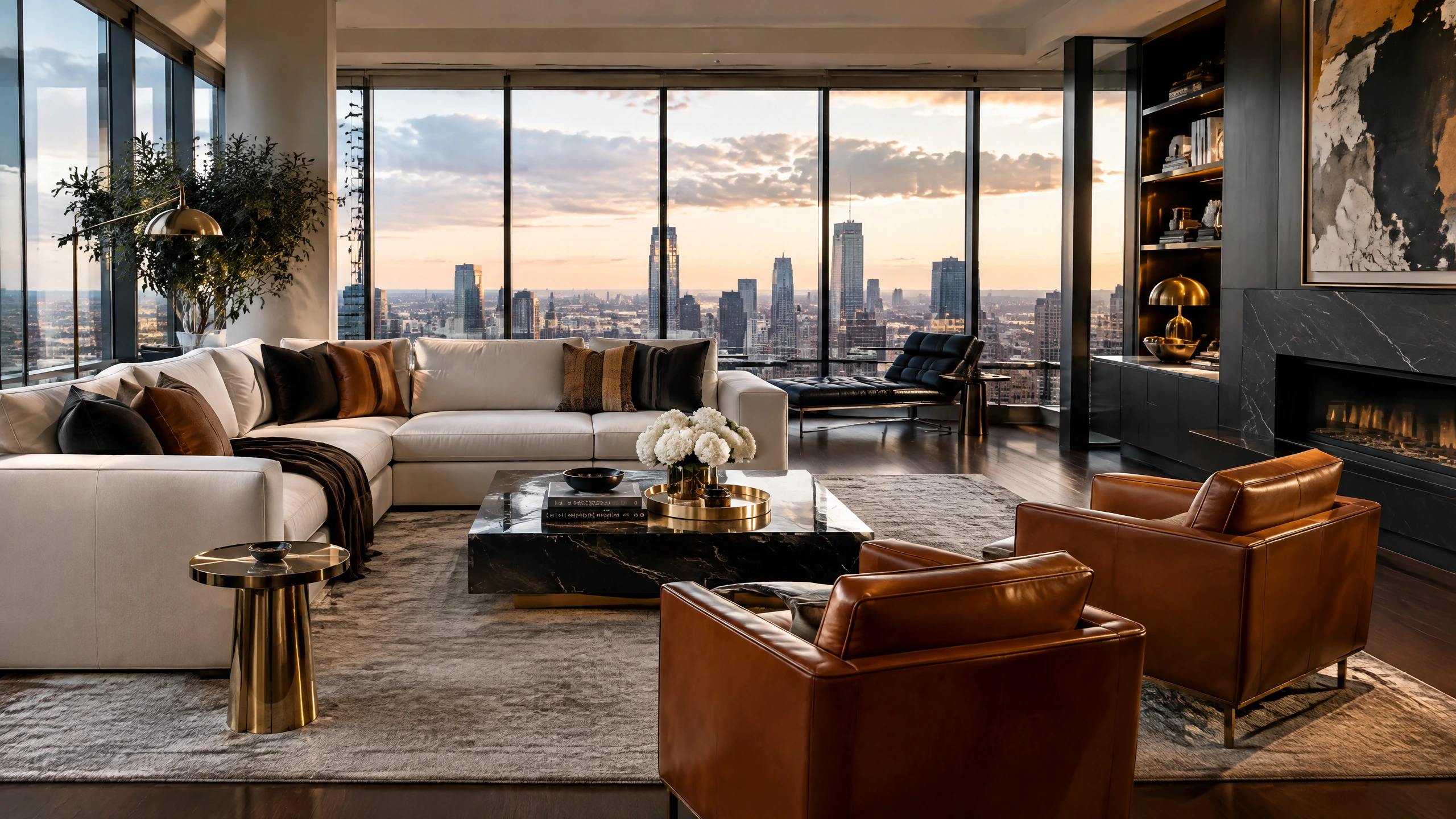
Palette: black, ivory, cognac leather, gray, and brass.
Style move: Frame the view instead of competing with it by keeping the major furniture silhouettes low and horizontal.
A city view already supplies visual drama, so the interior should use a disciplined palette. Cognac leather warms the black and ivory foundation, while brass repeats the glow of city lights after sunset. Place seating so it supports both the view and conversation. In a high-rise, pay attention to glare from windows and reflective surfaces; a rug and fabric curtains can improve acoustic comfort as well as soften the look.
14. Organic Glam in Olive, Clay, and Travertine

Palette: olive, cream, clay, travertine, and brushed bronze.
Style move: Create luxury through tactile materials and rounded forms rather than high shine.
Organic glam is a good choice if polished interiors feel too formal. A linen or textured sofa, travertine-look table, handmade ceramics, and a sculptural lamp provide visual interest through touch and silhouette. Use bronze sparingly so the room does not become rustic. The palette is naturally calming, but make sure there is enough contrast between the sofa, wall, and rug so the shapes remain legible.
15. Art Deco Teal, Black, and Brass

Palette: peacock teal, black, cream, and polished brass.
Style move: Repeat one geometric motif in the rug, mirror, or wall panel, but avoid using the same pattern everywhere.
Art Deco glam is about proportion, symmetry, and confident materials. A channel-tufted teal sofa supplies period character, while cream chairs and black accents keep the palette balanced. Brass should outline or frame key elements rather than coat every object. If you add fluted panels, use them on one wall or a built-in area to maintain a sense of restraint.
16. Cream-on-Cream Tonal Luxury

Palette: ivory, cream, oatmeal, pale oak, and champagne metal.
Style move: Layer at least three textures—boucle, linen, wool, plaster, or ribbed wood—so a pale palette does not look flat.
A tonal room feels expensive when the materials are carefully varied. Use warm whites rather than mixing a blue-white paint with yellow-cream upholstery. Add a dark accent in a frame or lamp base if the room needs definition. Because light upholstery shows wear, check cleaning instructions and consider removable, washable cushion covers in the main seating area.
17. Warm Modern Rust and Matte Black

Palette: rust, mushroom, cream, walnut, and matte black.
Style move: Combine a soft modular sofa with crisp black architectural lines for a modern room that still feels warm.
This palette bridges contemporary and cozy. Rust accents add energy without the brightness of red, while mushroom and cream prevent the room from feeling industrial. Use matte black on window frames, lighting, or occasional tables, and repeat it enough to look intentional. A large abstract artwork can connect the colors without forcing a literal theme.
18. Powder Blue, Mint, Peach, and Silver
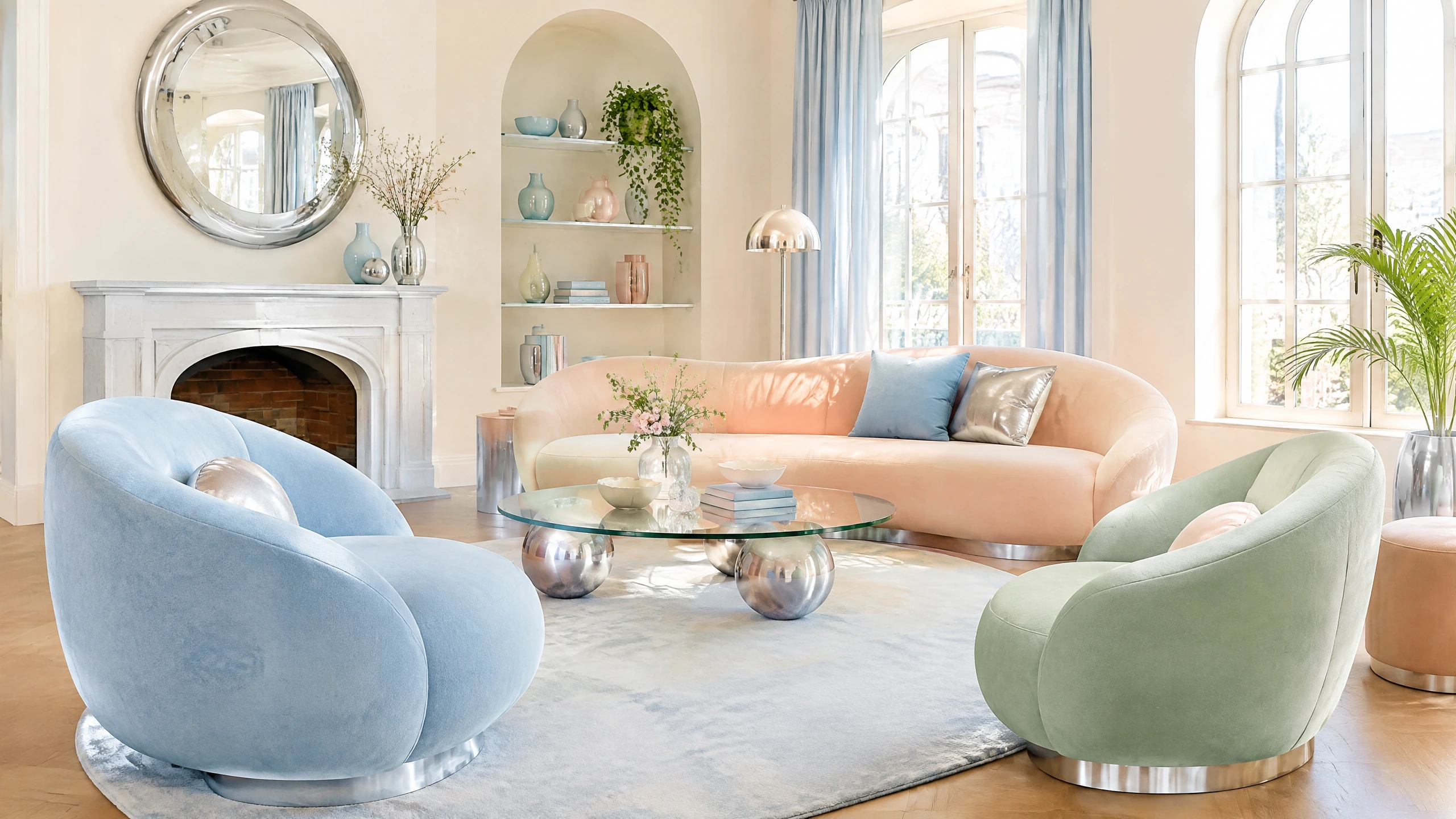
Palette: powder blue, mint, pale peach, silver, and white.
Style move: Keep the pastel colors muted and use silver only on a few high-impact pieces.
Pastels become glamorous when the silhouettes are grown-up: rounded lounge chairs, a substantial glass table, and a generous rug. Use one dominant pastel—here, powder blue—then treat mint and peach as supporting notes. Silver brings a cooler shine than brass, so warm the room with pale wood or a natural fiber rug if it starts to feel clinical.
19. Library Luxe in Forest Green and Tobacco Leather
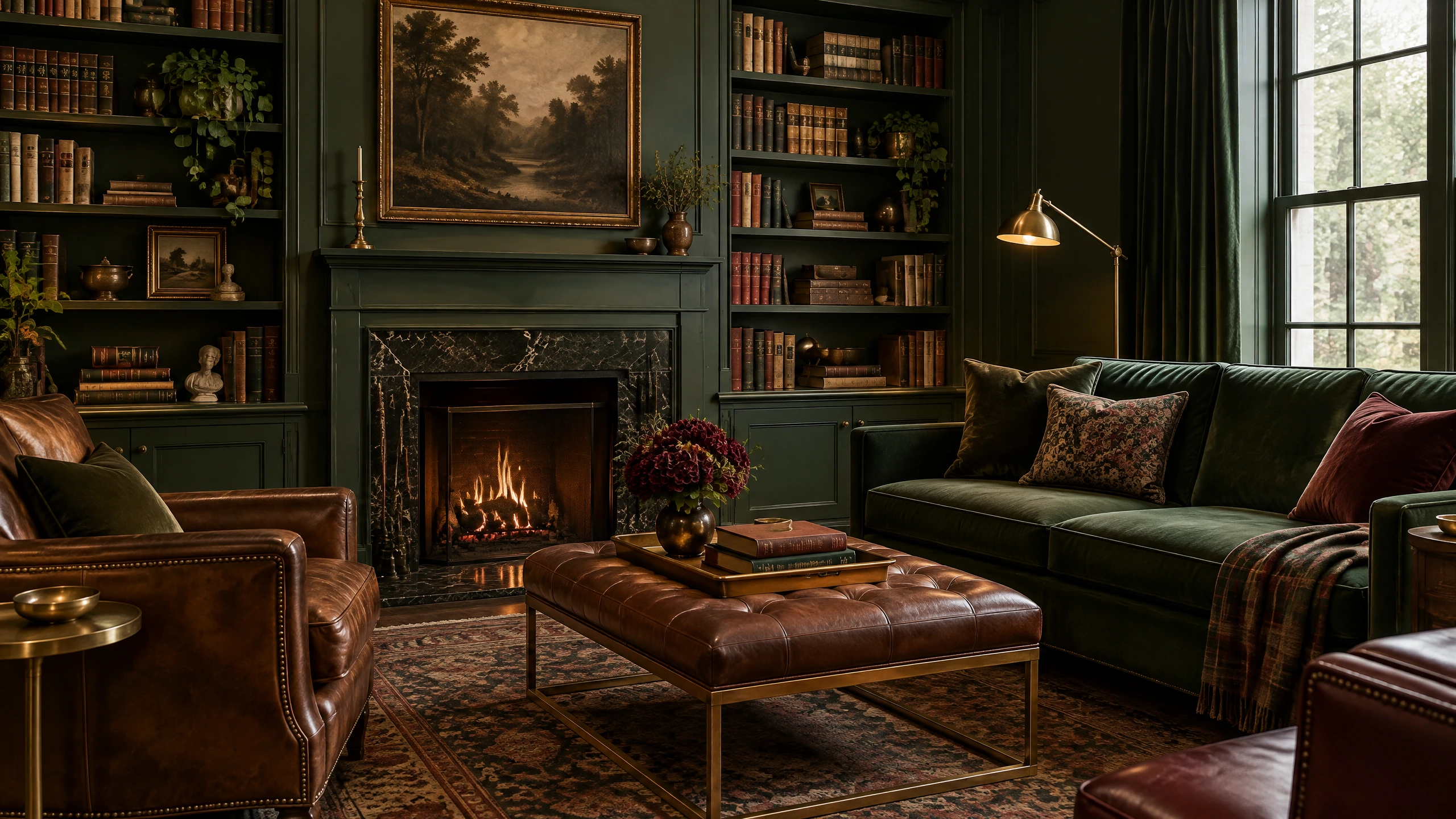
Palette: forest green, tobacco leather, oxblood, dark wood, and aged brass.
Style move: Combine books, art, and useful task lighting so the room feels like a lived-in library rather than a themed set.
This design is built for reading and conversation. A leather chair or ottoman introduces durable texture, while a green sofa gives the room a rich anchor. Place a directional lamp beside the reading seat and a softer lamp near the sofa. Keep books and objects grouped by height, leaving some shelf space empty; negative space makes a full bookcase look curated instead of crowded.
20. Low-Waste Luxe with Linen, Vintage Wood, and Sage

Palette: natural linen, reclaimed wood, muted blue, sage, and aged brass.
Style move: Buy fewer, better-suited pieces and mix vintage or secondhand furniture with new soft goods.
Glam does not require every piece to be new or highly reflective. A vintage wood coffee table, handmade ceramics, linen upholstery, and a carefully chosen brass lamp can feel more personal than a matched furniture set. Measure first, verify condition, and ask about repairability or replacement parts where relevant. If you are buying online, confirm dimensions, return rules, material descriptions, and user-review patterns rather than relying only on styled photographs.
How to choose among these glam living room ideas
Begin with the room’s fixed conditions: daylight direction, ceiling height, floor color, architectural features, and the way people move through the space. Next, decide whether the room should feel bright and airy, deep and cocooning, or warm and collected. That choice will narrow the palette quickly.
Then select the largest item that you are prepared to keep for several years, usually the sofa or rug. Build the rest around its undertone. A cream sofa with a pink undertone will behave differently from a gray-cream sofa beside brass and walnut. Order samples when possible and view them in the room at multiple times of day.
Finally, plan lighting before styling. Use a ceiling or pendant source for general illumination, a floor or table lamp for reading and other tasks, and accent light for art, shelves, or architectural texture. This layered approach is more flexible than trying to make one fixture perform every job.3
Amazon product ideas for a glam living room
The following are shopping categories and search links. Amazon inventory, prices, sellers, dimensions, and reviews change. Check the current listing, return policy, materials, dimensions, and electrical certifications before purchasing. If your site uses affiliate links, add your own legally required disclosure and replace these standard search URLs with your approved affiliate links.
| Product | Best for | What to check before buying |
|---|---|---|
| Velvet accent pillow covers | Adding jewel tones, blush, teal, or oxblood affordably | Insert size, zipper quality, wash instructions, and color variation |
| Arched wall mirrors | Small-space glamour and visual height | Safety hardware, hanging orientation, actual dimensions, and mirror distortion |
| Warm-white dimmable LED bulbs | Layered ambient lighting | Dimming compatibility, color temperature, lumens, base type, and energy label |
| Brass table lamps | Console, side-table, and library-luxe lighting | Shade height, cord length, bulb limit, switch placement, and finish reviews |
| Sculptural floor lamps | Creating a focal point without changing the ceiling | Base stability, footprint, height, bulb access, and glare control |
| Washable area rugs | Family-friendly glam and tonal rooms | True dimensions, backing, cleaning method, pile height, and color accuracy |
| Gold nesting coffee tables | Flexible layouts and small living rooms | Table weight, surface durability, edge safety, and assembly quality |
| Decorative picture lights | Art Deco, moody, and library-style rooms | Plug-in versus hardwired installation, bulb type, mounting hardware, and heat management |
| Boucle or linen accent chairs | Adding texture and a secondary seating color | Seat height, usable seat depth, weight capacity, fabric composition, and returns |
| Decorative brass trays | Containing coffee-table styling | Food-contact suitability, finish durability, dimensions, and care instructions |
A practical styling checklist
Before buying, measure the room, the doorways, the elevator or stair route, and the intended furniture clearances. Tape the footprint of large pieces on the floor for a day. This simple test reveals whether a coffee table is too large or a sofa blocks circulation.
Use a 60–30–10 approach only as a starting framework, not a rule. Approximately 60 percent can be a dominant neutral or wall color, 30 percent a secondary upholstery or wood tone, and 10 percent an accent color or metal. The exact ratio should respond to the architecture and your comfort level.
For lighting, consider warm white bulbs near 2700K–3000K and distribute the light across more than one source.3 Place a reading light where a seated person can actually use it, keep shades high enough to prevent direct glare, and use dimmers when the fixture and electrical setup allow them. For hardwired work, consult a qualified electrician rather than treating a style guide as installation advice.
Final takeaway
The best glam living room ideas are not defined by a single color, expensive label, or trend. They work because the palette is intentional, the furniture supports real life, the lighting is layered, and the room contains enough personal texture to feel inhabited. Choose one of the 20 directions above, test its colors in your own light, and build slowly around the pieces you genuinely want to live with.