Best Materials for Indoor Pool Ceilings to Prevent Humidity Damage
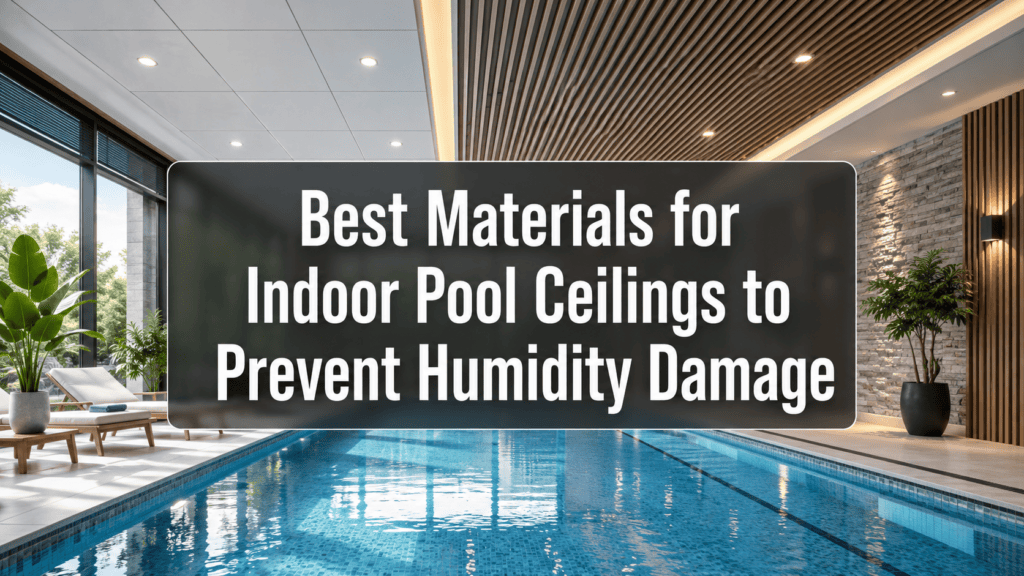
Walk into a High Ceiling Indoor Pool on a chilly morning and it instantly feels luxurious — steam rising off the water, light spilling through a skylight, that soft echo bouncing across the tile. But behind that dreamy scene sits a hard engineering reality: indoor pools produce nonstop humidity, and choosing the wrong Pool Ceiling material can quietly wreck the room within a few short years, leaving behind peeling paint, rusted fasteners, and creeping mold. If you’re planning a new build, renovating an old one, or just wondering why your natatorium keeps developing water stains, this guide walks through the materials that hold up — and the ones that don’t.
Anyone who’s already tackled a water-heavy project, like a backyard jacuzzi or a resort-style pool oasis, knows moisture control is never something you eyeball. An indoor pool raises the stakes even higher, since the humidity has nowhere to go without deliberate planning built into the ceiling, walls, and ventilation from the very start.
Why Indoor Pool Ceilings Take So Much Punishment
Every splash, every lap, every warm breath of humid air rises and settles against the ceiling. Mix in pool chemicals like chlorine and bromine, and the result is an environment that’s brutal on standard building materials. Condensation forms, drips back down, and slowly causes corrosion, mold growth, and structural decay. That’s why Indoor Pool Ceilings deserve their own design category instead of being treated like a normal room’s finish. Getting this right matters just as much as choosing the right tile or filtration system — something many homeowners discover only after their first renovation, much like the surprises that come up when people design a luxury backyard pool and outdoor space.
The Best Materials for Indoor Pool Ceilings
Stainless Steel Panels
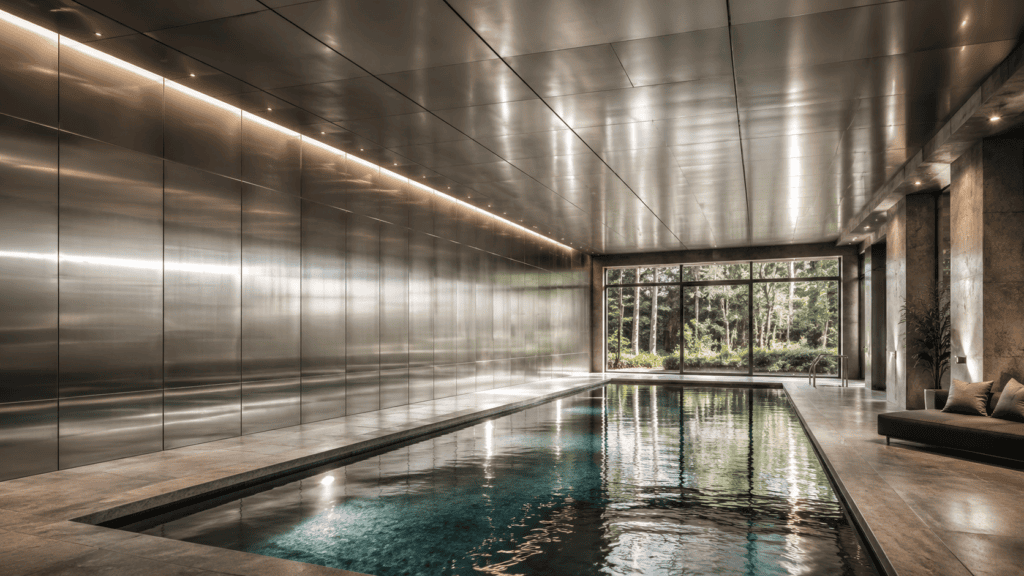
For sheer durability, a properly installed Stainless Steel Integrated Wall Panel system extended up into the ceiling is hard to beat. Stainless steel resists corrosion, doesn’t absorb moisture, and wipes clean easily, which is why it’s a go-to for commercial and hospitality projects. A Stainless Steel Wall Panel Design with a brushed or linear finish also brings a sleek edge that suits an Industrial Indoor Pool Design aesthetic. Homeowners exploring Stainless Steel Wall Panel Ideas for their own natatorium usually land on this material for one reason: longevity. It can outlast several rounds of pool deck renovations without ever needing replacement.
Troldtekt and Wood-Wool Acoustic Panels
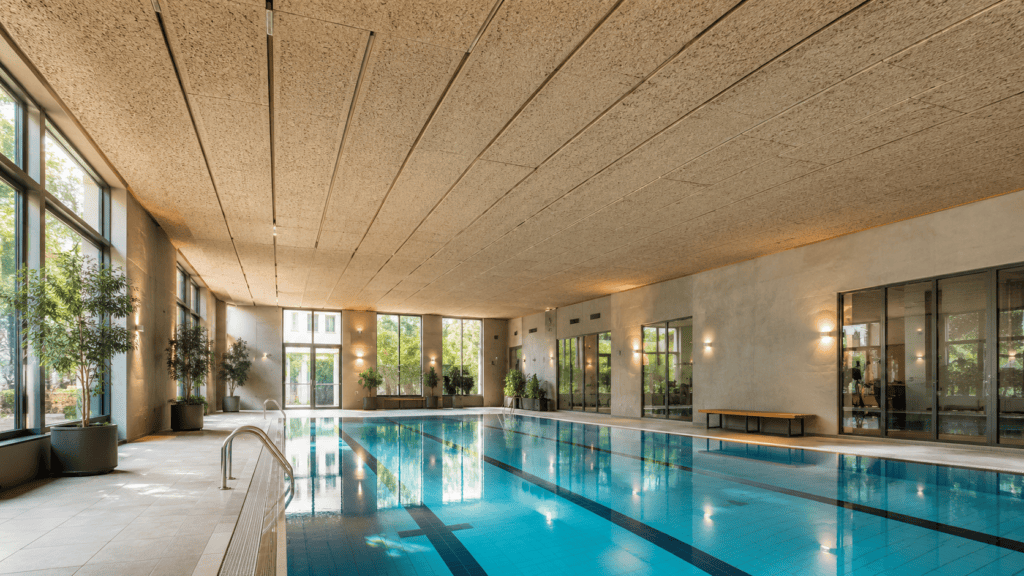
Pool rooms are notoriously loud, since sound bounces endlessly off hard tile and open water. That’s where Troldtekt Ceiling Panels shine. Made from wood wool and cement, Troldtekt Acoustic Panels absorb sound while holding up to moisture far better than standard acoustic tile. A Troldtekt Line Design ceiling adds texture and warmth too, softening what could otherwise feel like a sterile, echoing box. Architects frequently specify Troldtekt Ceiling Ideas for schools and community centers, where Acoustic Baffles For Gymnasiums and School Pool Design projects need both noise control and moisture resistance from a single product.
Vinyl-Faced and Moisture-Rated Gypsum
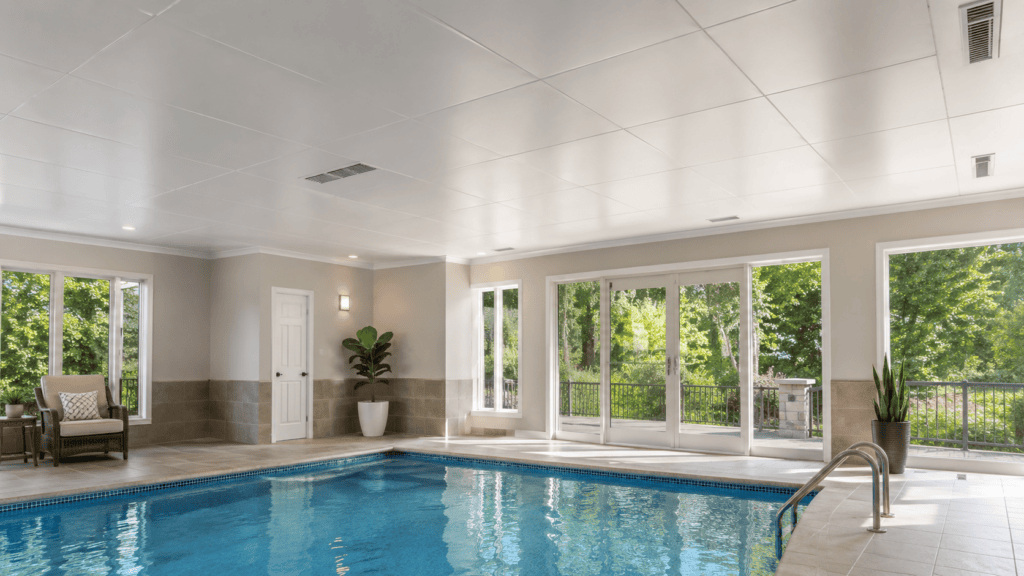
For tighter budgets, vinyl-faced, moisture-rated gypsum panels offer a reasonable middle ground. They cost far less than metal or specialty acoustic products, though they won’t last as long in a high-humidity Ceiling Pool environment. This option shows up often on lists of Cheap Pool Ideas Budget, and while it isn’t the most premium pick, it works fine in lightly used residential settings paired with strong ventilation.
PVC and Composite Ceiling Systems
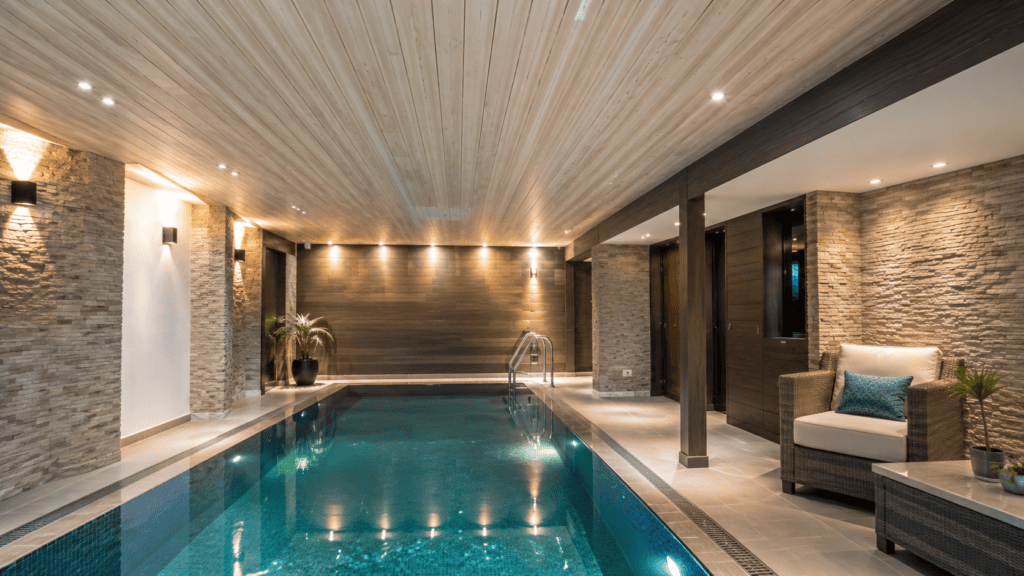
PVC panels are lightweight, fully waterproof, and easy to install, making them popular for Indoor Swimming Pool Design projects and retrofits alike. They won’t rust, warp, or rot, and they come in finishes that mimic wood or stone at a fraction of the price. For a budget-friendly Swimming Pool Ceiling Design, PVC is often the practical answer, especially in basement conversions like a Basement Swimming Pool, where headroom and moisture control are both tight constraints.
Sealed and Engineered Wood
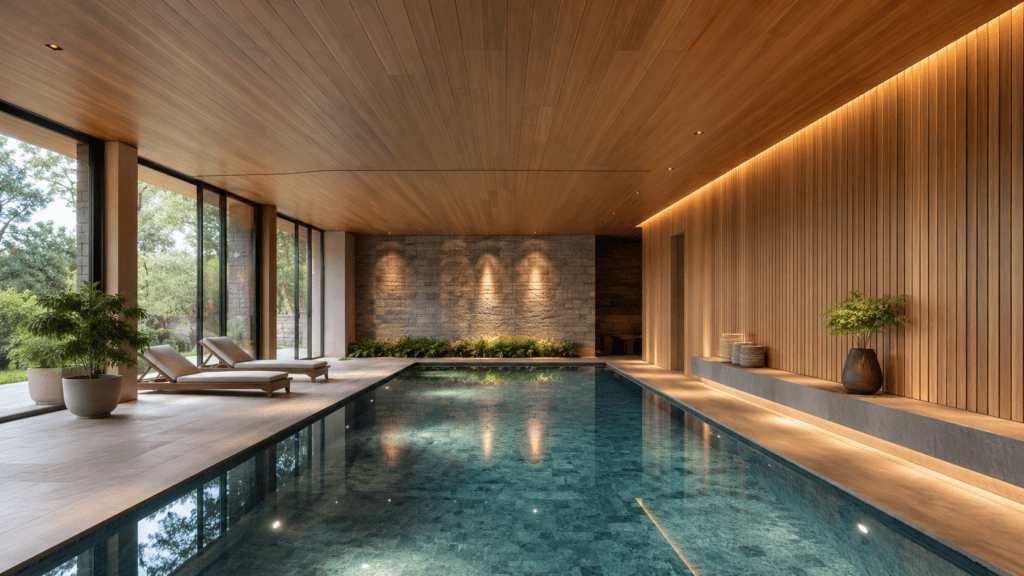
Wood brings a warmth nothing else quite matches, and an Indoor Pool With Wooden Ceiling can feel like a spa retreat instead of a chlorinated box. That said, raw wood is risky near water — the trick is using engineered, marine-sealed, or thermally modified wood rated for humid environments. Done right, a Modern Indoor Pool With Wooden Ceiling paired with Modern Indoor Pool With Wooden Wall paneling creates a Scandinavian-inspired calm that’s increasingly popular in luxury builds, echoing the natural textures found in a biophilic wood and stone interior.
Pool Ceiling Design Ideas That Also Fight Humidity
Material choice matters, but design intent matters too. Several Swimming Pool Ceiling Ideas double as functional humidity solutions:
- Skylights and Glazing — An Indoor Swimming Pool With Skylights setup floods the room with natural light and, paired with operable vents, helps push moist air out. The Skylight Pool Reflection on the water surface also creates a striking effect around midday.
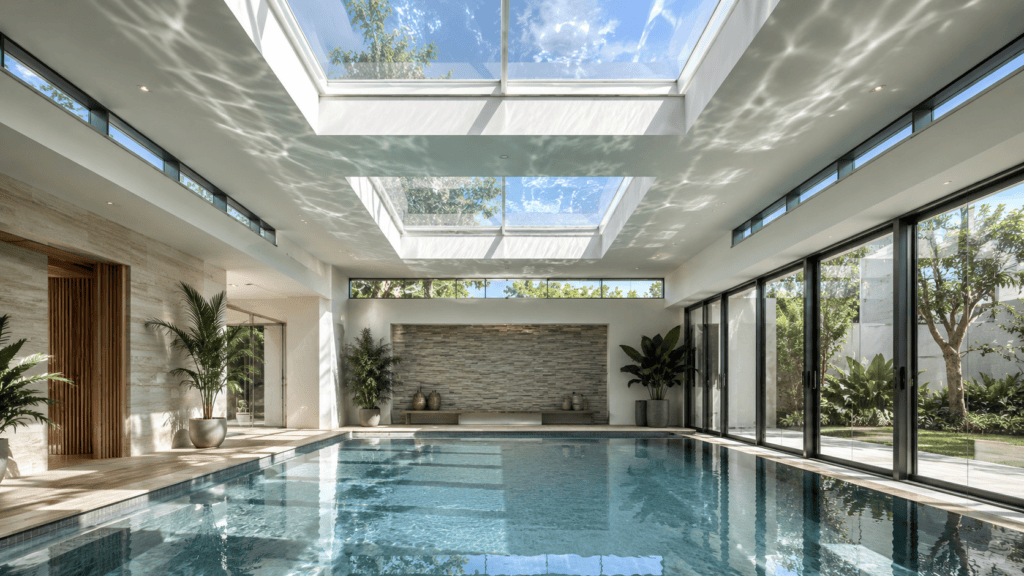
- Vaulted or Suspended Ceilings — A Suspended Ceiling Design raises humid air away from swimmers, giving vapor more room to disperse before it condenses, similar to how statement ceiling designs use height and shape to control both mood and airflow elsewhere in a home.
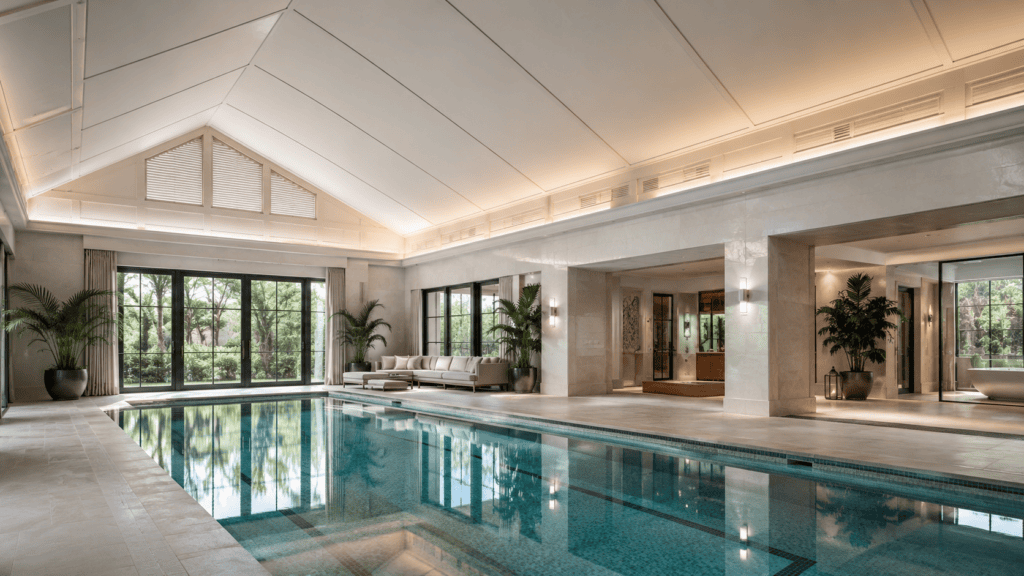
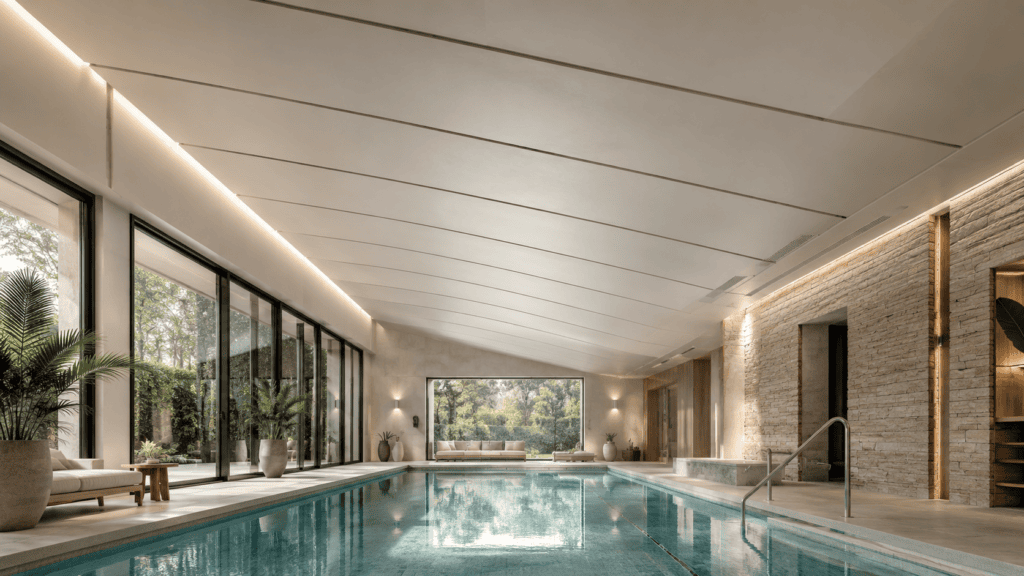
- Sloped or Curved Panels — Angled ceilings guide condensation runoff toward drainage points instead of letting it collect and drip randomly onto swimmers.
Lighting and Finishing Touches
Once the structural material is settled, lighting transforms the room. Natatorium Lighting Design and Swimming Pool Lighting Design both call for fixtures rated for damp or wet locations, since standard residential fixtures corrode fast in this environment. For drama, a Modern Indoor Pool With Blue Ceiling paired with cove lighting creates a resort-like glow, while a Modern Spa Room With Star Ceiling or Indoor Pool With Starry Ceiling uses fiber optic points to mimic a night sky overhead, a favorite for Luxury Indoor Pool Lighting installations. If layered lighting effects appeal to you, you’ll find similar inspiration in these ceiling designs with fans, beams, and lights used elsewhere in the home.
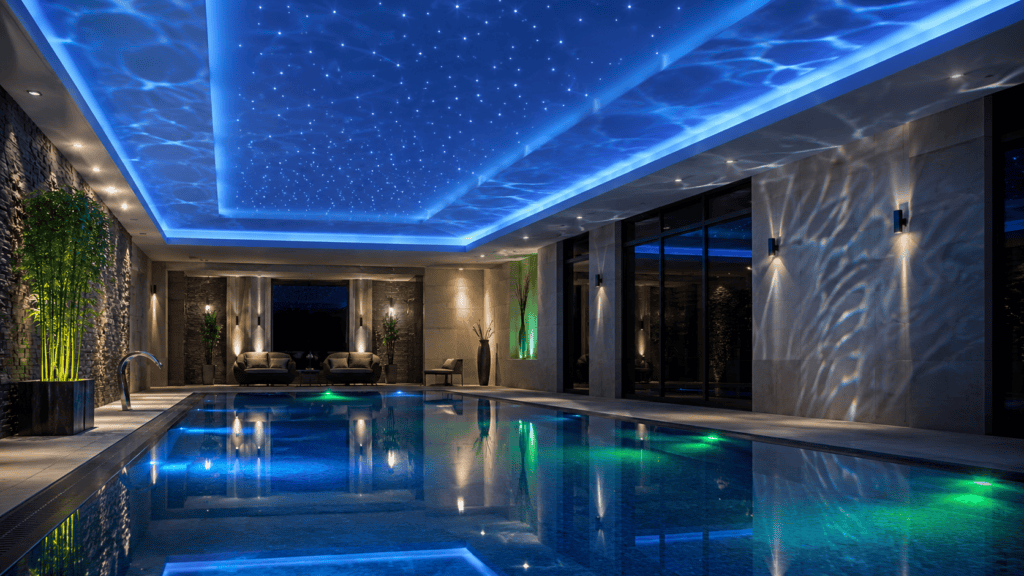
For something more playful, a Modern Indoor Pool With Green Lighting setup or a Water Ripple Ceiling effect, created with light projectors rather than actual water, adds movement without adding any moisture risk.
Hotel, Gym, and Commercial Considerations
Commercial spaces deal with even heavier humidity loads than residential pools thanks to constant use. Hotel Pool Design projects, especially at properties with a Ritz Carlton-caliber finish, typically combine stainless steel framing, Troldtekt acoustic ceilings, and moisture-rated LED lighting for Commercial Indoor Pool Lighting. A Luxury Indoor Gym With Pool or Sports Pool Design facility also needs to think through Indoor Pool Wall Material choices that match the ceiling system, since mismatched materials expand and contract at different rates and end up cracking at the seams over time.
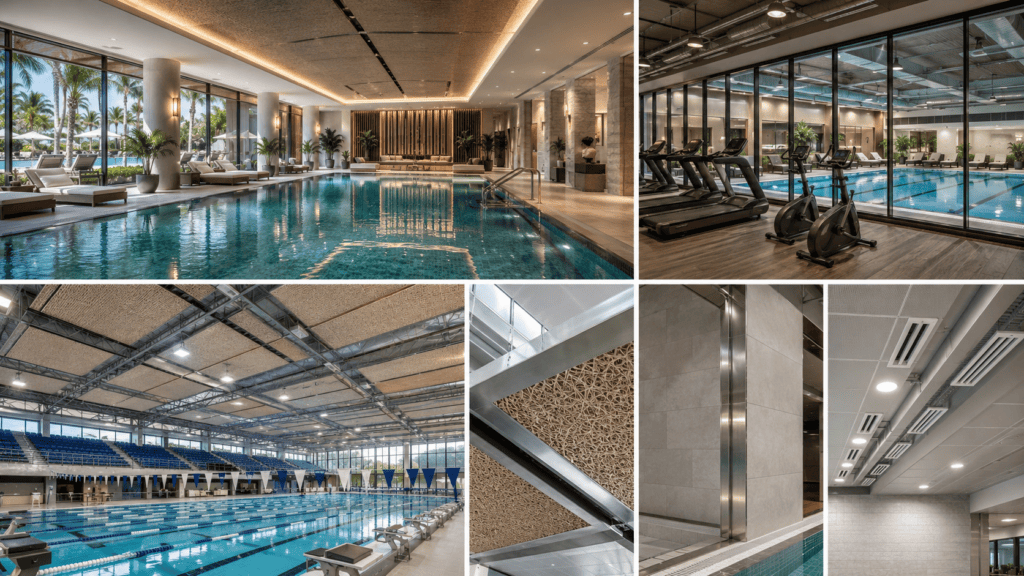
Universities and swim clubs face the same challenge at a larger scale. A University Swimming Facility or Swimming Hall typically runs dehumidification systems around the clock, but even the best mechanical setup can’t make up for a ceiling material that was never built to handle constant condensation. Pairing the right material with a correctly sized HVAC system is what separates a facility that lasts fifty years from one that needs a full Swimming Pool Renovation within a decade.
Maintenance Tips to Extend Ceiling Life
No material is entirely maintenance-free. Even stainless steel benefits from periodic wipe-downs to prevent mineral deposits, and Troldtekt panels should be checked annually for signs of trapped moisture behind the surface. A few habits go a long way:
- Keep pool chemical levels balanced, since overly acidic water off-gasses more aggressively and speeds up ceiling corrosion.
- Run exhaust fans or dehumidifiers continuously, not just after swim sessions.
- Inspect seams and joints yearly, since that’s where most leaks and mold problems start.
- Choose finishes that can be resealed or recoated rather than fully replaced once wear starts to show.
Helpful Products for Managing Pool Ceiling Humidity
A few practical products make it easier to protect your Pool Ceiling once the material itself is chosen:
- Waterproof PVC Drop Ceiling Tiles — A budget-friendly option for retrofitting an existing pool room, offering corrosion and oil resistance along with an easy drop-in installation.
- Large-Capacity Room Dehumidifier — Essential for keeping relative humidity in the recommended 50–60% range and protecting ceiling materials from constant condensation exposure.
- Brushed Stainless Steel Sheet Panel — A durable option for accent walls or ceiling trim in an Industrial Indoor Pool Design, resistant to rust and easy to wipe clean.
- Fiber Optic Star Ceiling Light Kit — Waterproof fiber optic cabling designed to recreate a starlit sky effect, popular for spa rooms and luxury pool ceilings.
- Professional Digital Hygrometer — Useful for monitoring humidity levels in real time so you can catch problems before they damage your ceiling.
Frequently Asked Questions
What is the best material for an indoor pool ceiling? Stainless steel and Troldtekt wood-wool acoustic panels are generally the top performers, since both resist corrosion and moisture buildup while holding up to years of constant humidity exposure. PVC is a strong runner-up for tighter budgets.
Can I use drywall for an indoor pool ceiling? Standard drywall isn’t recommended. A moisture-rated, vinyl-faced gypsum panel can work in lightly used residential settings with strong ventilation, but it will degrade faster than metal or specialty acoustic materials in a high-humidity Indoor Pool environment.
How do I stop condensation from dripping off my pool ceiling? A combination of continuous dehumidification, properly sloped or vaulted ceiling panels, and moisture-resistant materials is the most reliable fix. Sloped panels direct runoff toward drainage points instead of letting it collect and drip onto swimmers below.
Is wood safe to use on an indoor pool ceiling? Yes, as long as it’s engineered, marine-sealed, or thermally modified wood rated for humid environments. Untreated or standard interior wood will warp and rot quickly near an indoor pool.
How often should an indoor pool ceiling be inspected? Most professionals recommend a full inspection at least once a year, checking seams, joints, and any areas prone to trapped moisture, with more frequent spot checks in high-use commercial or hotel facilities.
Do skylights cause more humidity problems in a pool room? Not if they’re designed correctly. A well-installed Indoor Swimming Pool With Skylights setup, paired with operable vents or a dehumidification system, actually helps manage moisture by encouraging airflow and giving humid air somewhere to escape.
Bringing It All Together
Whether you’re designing a Modern Indoor Pool Design from scratch or renovating an aging Interior Swimming Pool, the ceiling deserves the same attention as your tile, lighting, and Pool Bar Design. Stainless steel and Troldtekt panels offer the best long-term humidity resistance, PVC and vinyl-faced gypsum work well for tighter budgets, and sealed wood delivers warmth for those chasing a spa-like atmosphere. For more inspiration on blending natural materials with pool spaces, take a look at this modern rustic indoor pool roundup, or if you’re leaning toward a lush, greenery-filled look, this modern tropical pool with jungle greenery guide shows how planting and materials can work together.
Get the ceiling material right, and your indoor pool stays beautiful — and structurally sound — for decades to come.