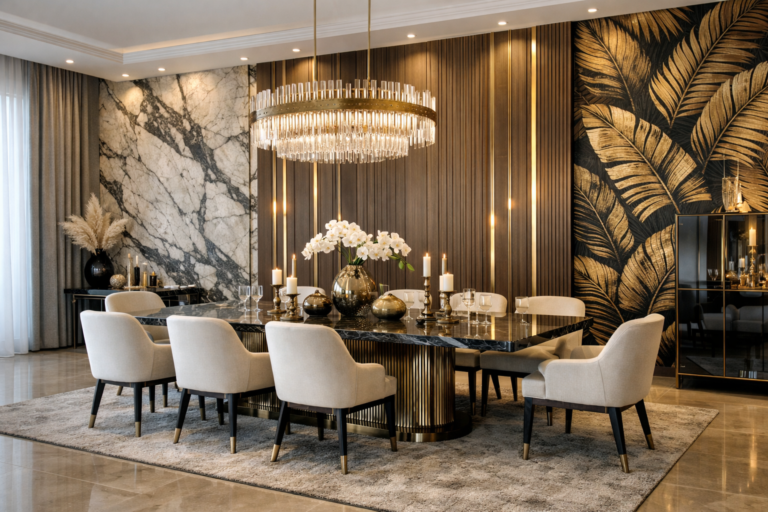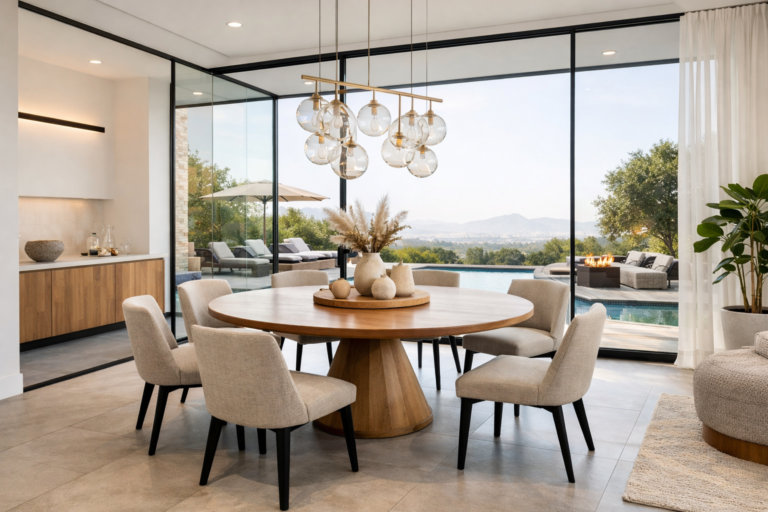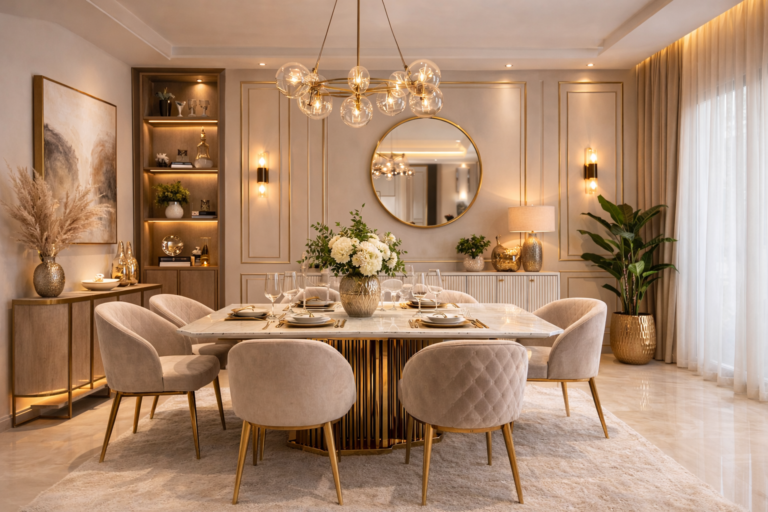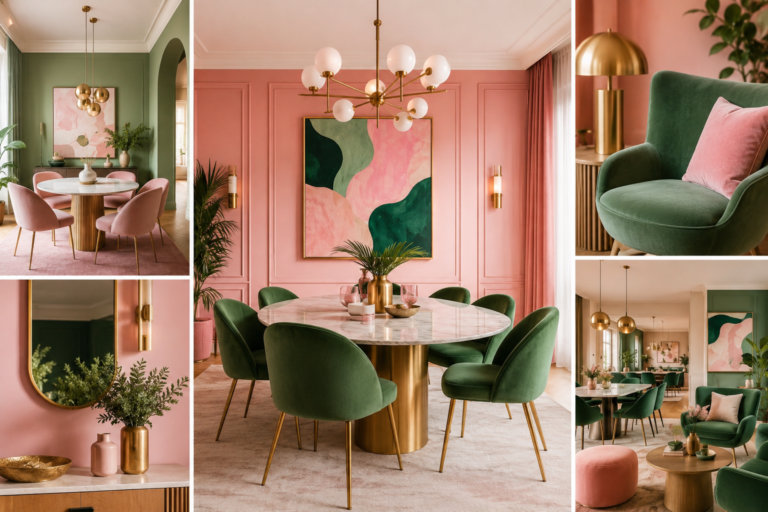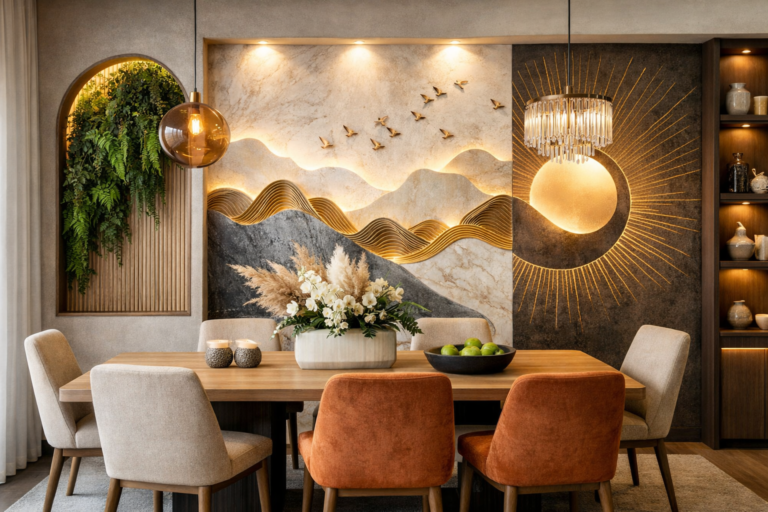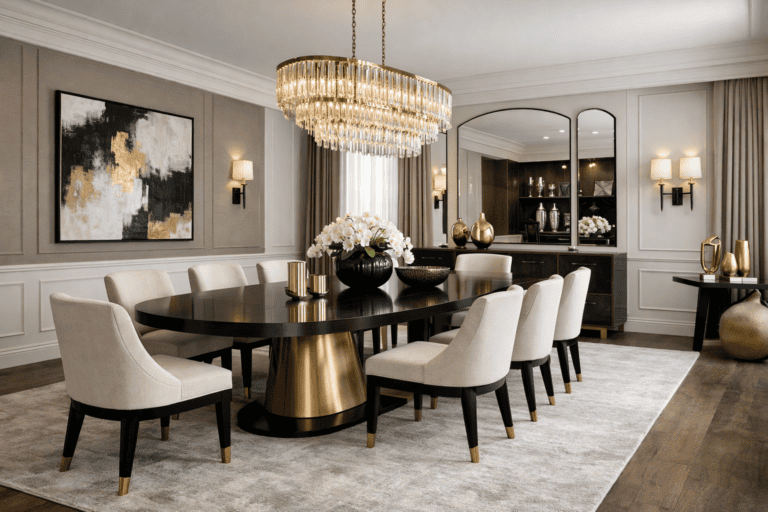
How to Design a Breakfast Nook That Feels Custom and Expensive
INTERIOR DESIGN · DINING SPACES · HOME STYLING
Transform an overlooked corner of your kitchen into the most inviting seat in the house.
There is something irresistibly romantic about a breakfast nook — a tucked-away spot with warm light, layered cushions, and a table that makes you want to linger over coffee long after your cup is empty. The best ones look like they cost a fortune and took a designer years to perfect. The secret? They almost never do.
Whether you’re working with a generous corner in a sprawling kitchen or trying to carve out a small dining area in a compact apartment, a thoughtfully designed breakfast nook can elevate the entire feel of your home. This guide walks you through every decision — from layout and seating to materials, lighting, and styling — so the final result looks completely bespoke.
Start With the Right Layout for Your Space
The classic approach places seating in a corner, and for good reason. Corner dining table ideas make efficient use of walls, anchor the space visually, and create that enclosed, cozy feeling that makes a nook feel intentional rather than incidental. An L-shaped banquette against two walls with a corner dining table in the center is the most space-efficient configuration you can build.
That said, don’t feel hemmed in by tradition. A breakfast nook not in corner can be just as compelling — a single banquette running along one wall (a one wall banquette), a window seat design that doubles as a dining perch, or a freestanding nook with bench pulled into the middle of a bright kitchen all have their own charm. The key is that the seating feels deliberate, not like furniture that simply got pushed aside.
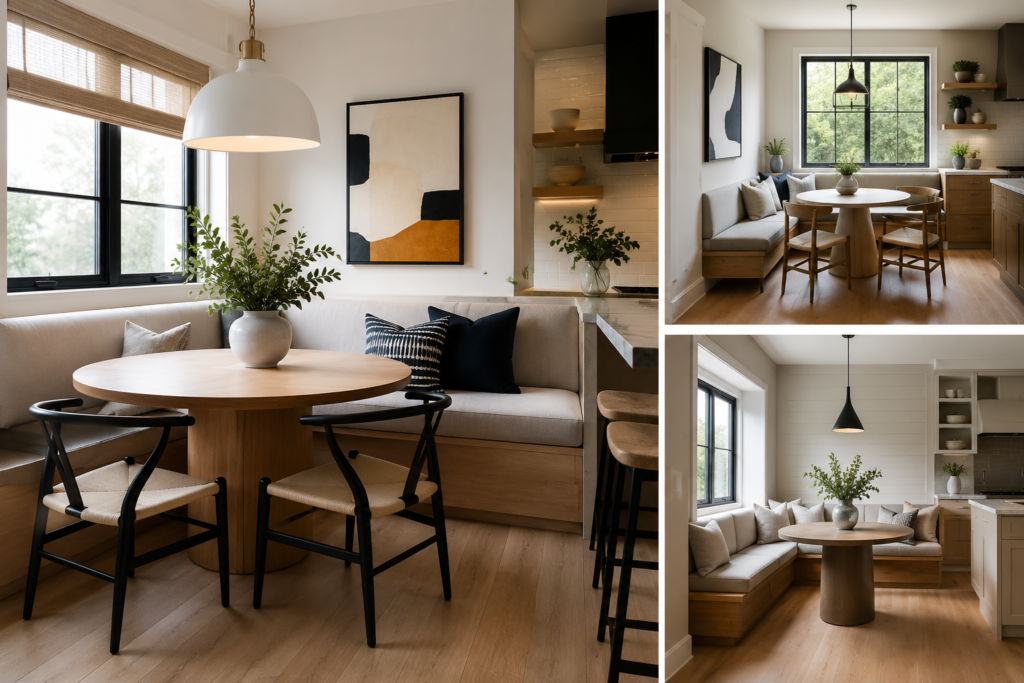
For tighter footprints, think about small corner dining area ideas that use every inch wisely: a built-in bench along the back wall with a corner dinner table tucked into the junction, chairs on the open sides. This approach mirrors the booth seating you’d find in a well-appointed café or restaurant interior, and it works beautifully in small kitchens where a traditional dining set would overwhelm the room.
Designer tip: Before committing to a layout, tape out the footprint on your floor with painter’s tape. Live with it for a day. You’ll immediately know if the traffic flow works and whether the proportions feel right for the space.
Built-In Banquette Seating: The Shortcut to Looking Custom
Nothing makes a breakfast nook look more expensive than built-in seating. A built-in bench for dining table reads as architectural detail — it suggests the home was designed this way from the beginning, even if you added it last weekend. Banquette seating with built-ins can incorporate storage drawers beneath the seat, bookshelves on either side, or even a dining nook with storage above via floating shelves or cabinetry.
If true built-ins are beyond your current budget, a convincing alternative is to use kitchen bench seating ideas that mimic the look: a long upholstered bench pushed against the wall, flanked by matching side panels or simple wainscoting. Add a wall banquette seating effect by painting the wall behind in a contrasting color or covering it in a statement wallpaper, and the whole composition reads as considered and custom.
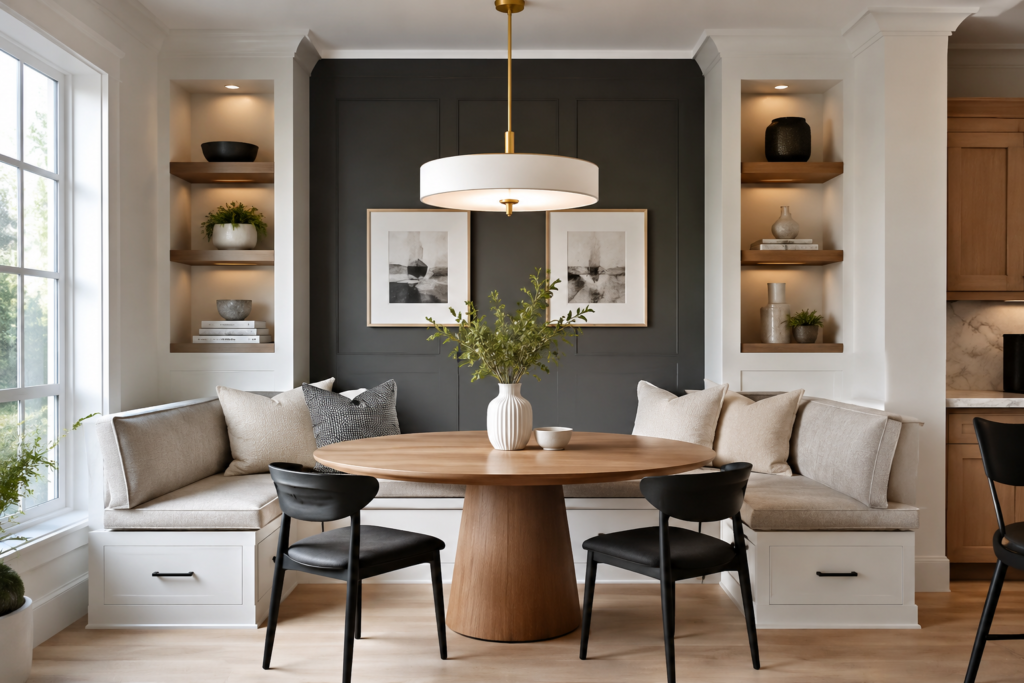
When planning your kitchen bench with table configuration, the standard rule is 18 inches of seat height and 12 inches of knee clearance between the seat and the tabletop underside. For a round table bench seating arrangement — always more intimate and social than a rectangle — a pedestal base is your best friend because it eliminates the leg interference that plagues standard four-legged tables in tight banquette setups.
Recommended: For a ready-made banquette that looks built-in, look for upholstered storage bench seats in neutral linen or boucle on Amazon. These pair beautifully with a pedestal dining table.
→ SHOP UPHOLSTERED STORAGE BENCHES
Corner Dining Table Design: Choosing the Right Table
The table is the heart of any nook, and the right corner dining table design can make or break the whole space. For corners, a round or oval table almost always looks more elegant than a square or rectangle — the curves soften the hard angles of the walls and make moving around the space feel less cramped. A round corner kitchen table with a single pedestal base in painted wood or marble-look stone can look remarkably high-end for a modest investment.
For a modern dining room with built-in seating, consider a table in white oak, walnut, or a matte-finished wood composite. These materials photograph beautifully and age gracefully. Avoid glass tops in a working breakfast nook — they show every fingerprint and crumb, which undermines all the effort you’ve put into the design.
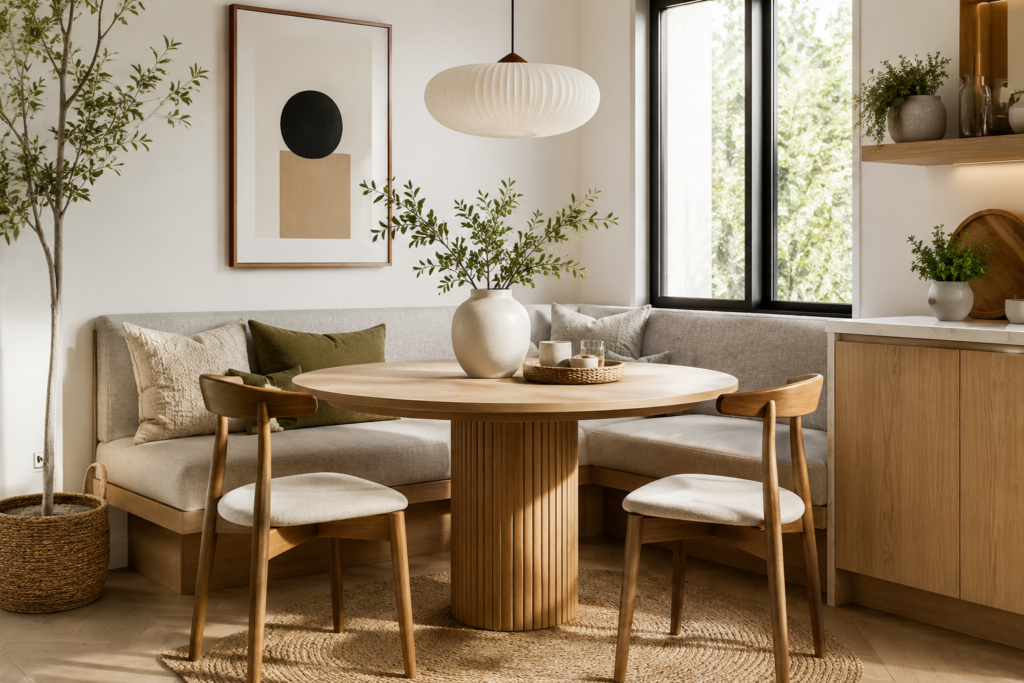
If you’re leaning into a more editorial, café-inspired direction, a bistro dining room feel is achieved with a small round marble-topped table, bentwood chairs, and pendant lighting overhead. This look draws heavily from Japandi influences — that warm blend of Japanese minimalism and Scandinavian coziness that has dominated interior design in recent years.
🪑 Recommended: A round pedestal dining table in solid wood or marble finish anchors the look without overwhelming a small space.→ Shop Round Pedestal Dining Tables on Amazon
Breakfast Nook Chairs and Cushions: Where Comfort Meets Style
A common mistake is over-investing in the table and treating breakfast nook chairs as an afterthought. In reality, the seating is what people interact with every single day, and it’s the most tactile element in the space. For a nook that feels genuinely luxurious, focus on upholstered seating with a durable, cleanable fabric — performance velvet, indoor-outdoor linen, or a tight boucle weave all work well.
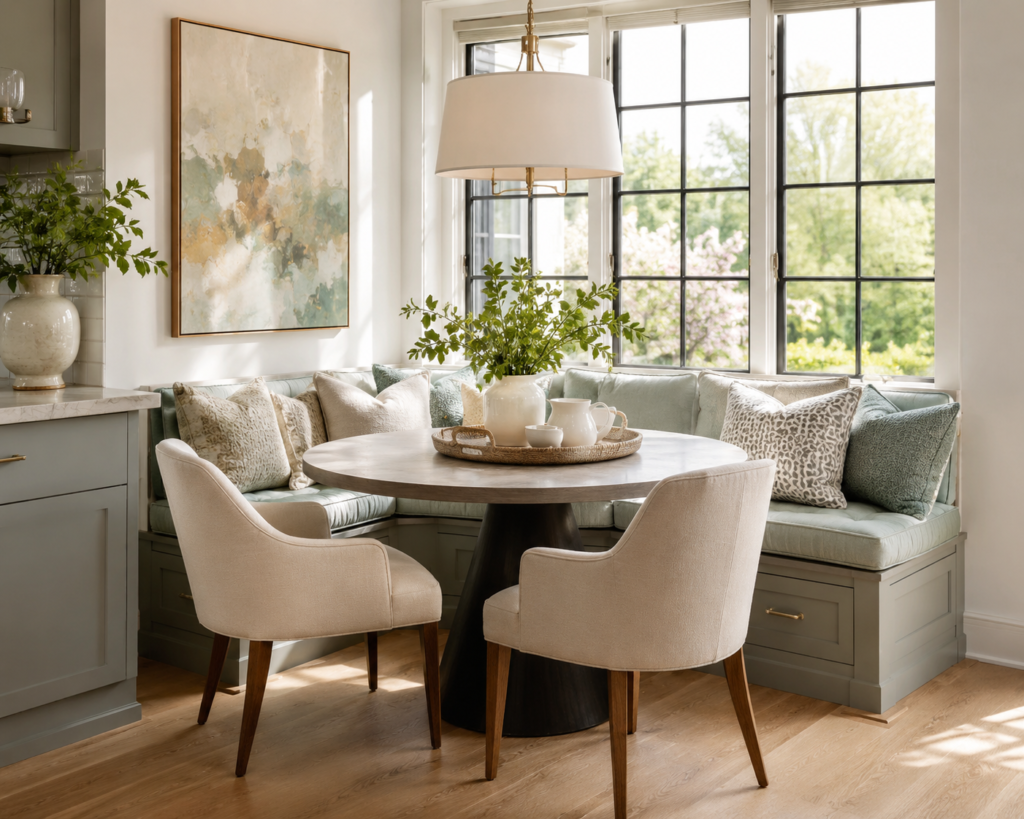
If you’re working with a kitchen nook table and chairs arrangement (as opposed to a fully built-in banquette), choose chairs with a slightly lower back so they tuck neatly under the table and don’t visually chop up the space. A set of four matching chairs reads as intentional; mixing two styles with a how to mix and match dining room furniture approach — perhaps two upholstered armchairs at the ends and bench seating along the back wall — adds personality without looking chaotic.
Bench cushions deserve real thought. A thin, tired cushion signals “temporary.” A thick, tailored cushion with a button-tufted or knife-edge finish signals “this was designed.” For a truly polished look, have cushions made in a fabric that coordinates with your window treatments or kitchen textiles.
Back Cushions
Layering lumbar pillows against the bench back adds depth and softness. Vary sizes: one large, two small bolsters.
Mixing Patterns
Use one bold pattern (stripes, florals, geometric) and keep the rest solid. This is the designer’s formula for layered depth without visual chaos.
Seat Cushion Thickness
Aim for 3–4 inches of foam, wrapped in Dacron for a plump, full look. Anything thinner reads as an afterthought.
Fabric Durability
Choose performance fabrics rated above 30,000 double rubs (Martindale) for a breakfast nook — spills and daily use add up fast.
Small Dining Room Corner Ideas: Maximizing Every Square Foot
The challenge with small dining room corner ideas is making the space feel purposeful rather than squeezed. A few design principles go a long way here. First, scale: every piece of furniture should be proportional to the footprint. Oversized chairs in a tiny nook don’t make it feel grander — they make it feel cluttered. Second, visual weight: lighter finishes (white, natural wood, pale upholstery) make a compact corner feel airier than dark tones. Third, mirrors: a well-placed dining wall mirror opposite the nook can visually double the perceived depth of the space.
For genuine small dining ideas space saving, consider a folding dining table small space that folds flat against the wall when not in use, or a modular kitchen table with extendable leaves. A gate-leg or drop-leaf table can look surprisingly refined when styled well — it’s all about the details surrounding it: good lighting, quality cushions, a small vase of fresh flowers.
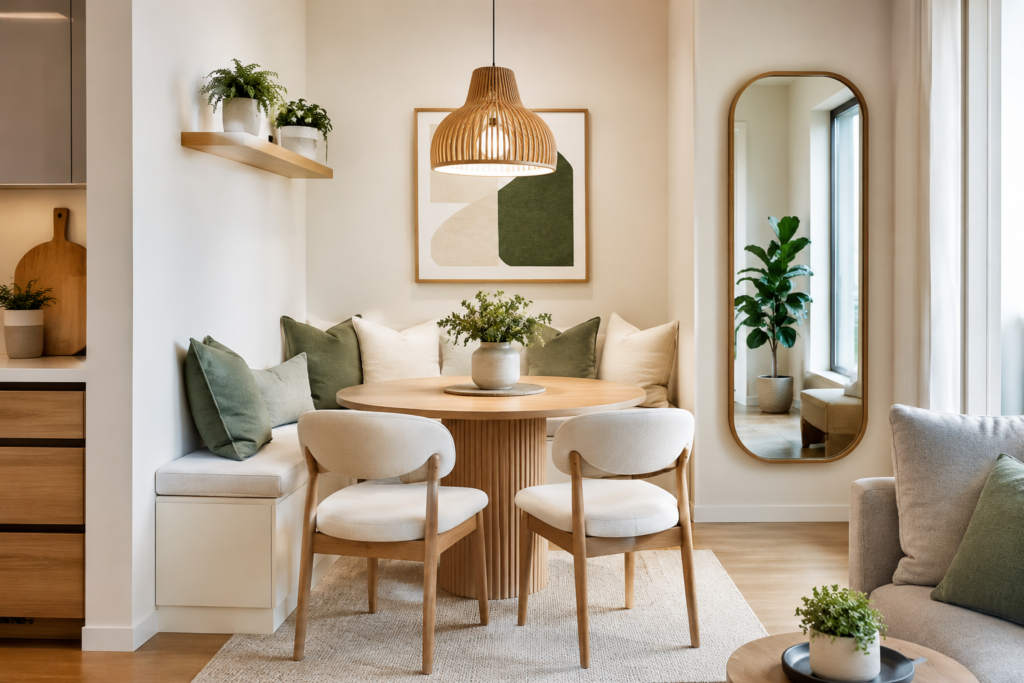
In a studio or condo interior where the dining area bleeds into the living room, define the nook visually using a small area rug, a pendant light positioned directly over the table, or a painted accent wall or dining wall paneling design behind the seating. This zoning technique gives the nook its own identity within a shared open-plan space.
🪞Recommended: A round or arched wall mirror in a natural wood or brass frame adds depth to a compact nook and bounces light beautifully.Lighting, Color, and Wall Details That Make It Feel Expensive
Lighting is the single highest-leverage investment in any dining or breakfast space. A pendant light hung 28–32 inches above the tabletop creates intimacy and pools light exactly where you need it. For a breakfast nook, consider a rattan or linen drum shade for warmth, or a sculptural ceramic pendant for an editorial edge. The fixture should feel slightly oversized — timid pendant choices disappear visually and fail to anchor the space.
On the walls, wall paneling for dining area — whether shiplap, board-and-batten, or dining wall moulding — adds instant architectural character. This is one of the best DIY investments you can make because painted paneling looks expensive even when it costs very little. A sage green banquette seating palette paired with warm white paneling and natural wood is one of the most consistently beautiful combinations in contemporary interior design right now.
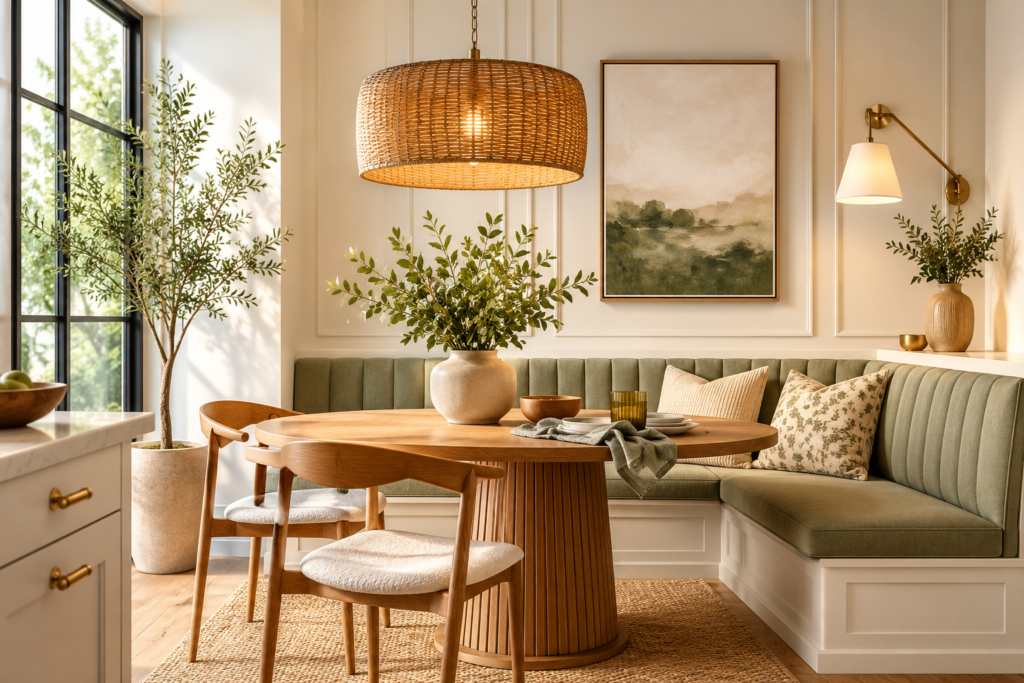
For a cozy kitchen table ideas direction, lean into warm neutrals: cream, warm white, honey oak, aged brass hardware. For a contemporary dining room design feel, try a matte black and warm wood palette with a minimalist dining area approach: fewer decorative items, better quality in each one. Either way, keep the dining area wall art limited to one or two pieces of significant scale rather than a gallery wall, which tends to make small spaces feel cluttered.
The rule of three for nook styling: On your table, aim for three items at most — a small vase or bud vase, a candle or small lamp, and a tray or ceramic object. This gives the look of a styled space without tipping into maximalist clutter. Rotate seasonally to keep the space feeling fresh.
The Finishing Touches That Tie It All Together
A breakfast nook is ultimately an invitation. Every finishing detail either extends that invitation or undermines it. A dining nook rug grounds the seating area and adds warmth underfoot — choose something washable in a natural fiber or a low-pile performance material. Curtains or a simple Roman shade at the window (if there is one) soften the space and add that layered, home-like quality that designer spaces always have.
For dining nook shelves or open storage nearby, curate carefully: cookbooks stacked in groups of two or three, a small plant or trailing vine, a few ceramic bowls or pitchers. The goal is abundance without busyness — the sense that the space is well-lived-in and genuinely loved.
Finally, don’t overlook the dining room bench seat details: legs in a finished metal (brushed brass, matte black, aged bronze), fabric piping or trim on cushions, and nailhead accents all signal that the seating was chosen with intention. These are the quiet signals of quality that visitors notice without being able to articulate exactly why the space feels so elevated.
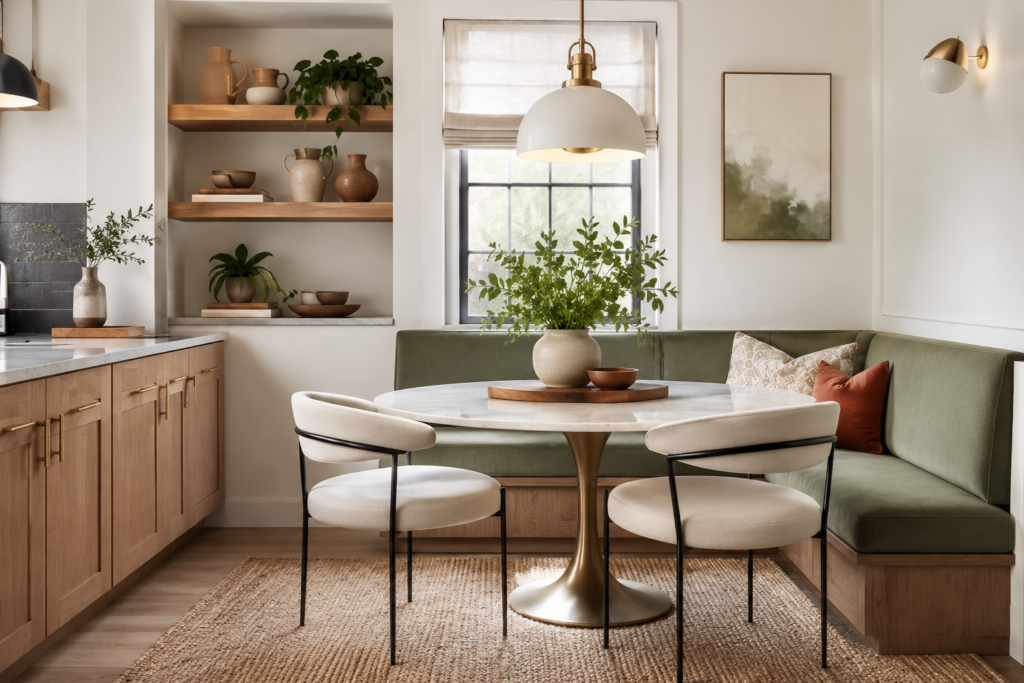
A breakfast nook done well is one of the most rewarding projects in home design — intimate in scale, rich in daily reward, and endlessly personalizable. Whether yours is a rustic corner dining nook with reclaimed wood and linen, a mid century modern breakfast nook with tapered-leg chairs and a Saarinen-style tulip table, or a green banquette seating in kitchen setup inspired by the best Parisian café, the principles are the same: build it to fit, upholster it generously, light it beautifully, and style it with restraint.
The Bottom Line
A breakfast nook that feels custom and expensive is really a breakfast nook that feels considered. Start with the right footprint, invest in the seating quality, get the lighting right, and layer in texture and color thoughtfully. The result will be a corner of your home that earns every compliment it receives — and one you’ll genuinely look forward to sitting in every single morning.