8 Corner Sink Ideas for a Small Kitchen Remodel — Space-Saving Designs and Smart Layout Tips
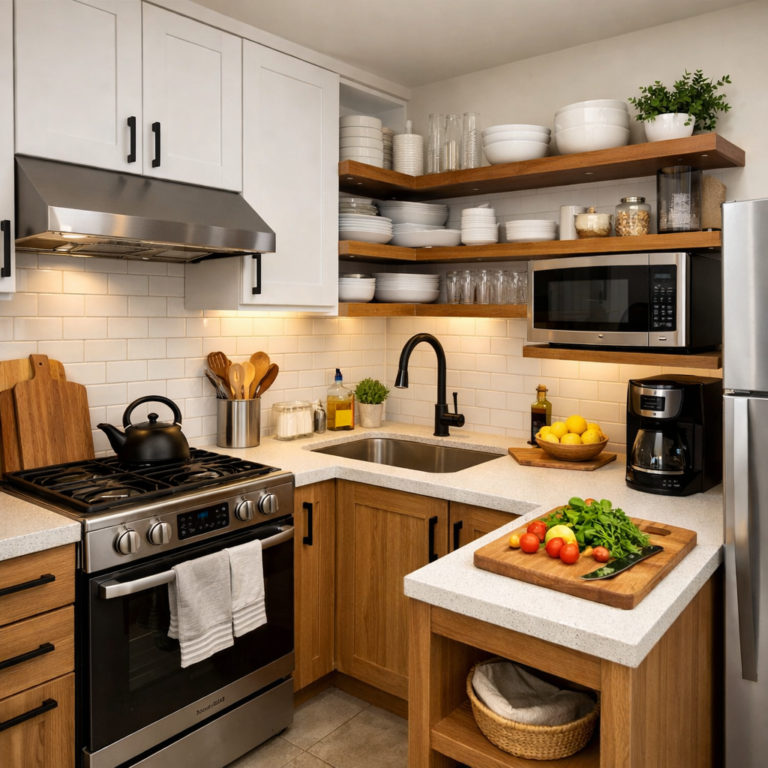
Tight kitchens can feel limiting, but a corner sink can free up counter space and improve how you work in the room. You’ll learn practical corner sink options that help you save space, boost function, and match your kitchen’s style so your remodel actually makes daily tasks easier.
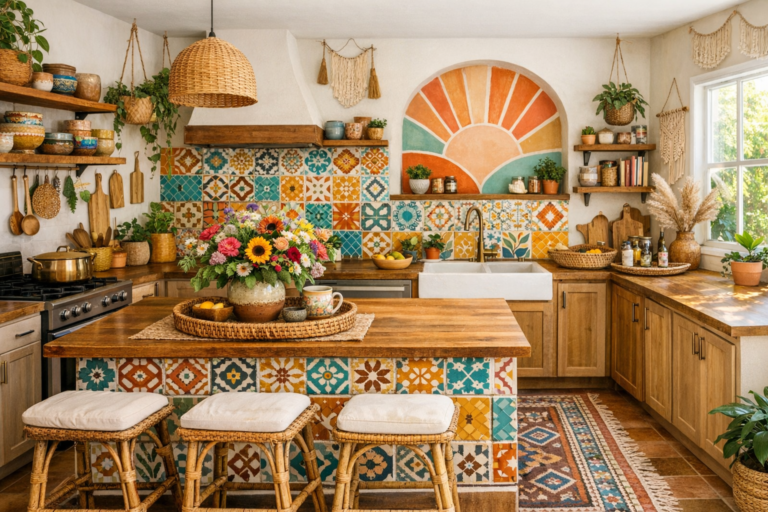
This article walks you through smart designs—from compact single bowls to multitasking double bowls and surface finishes that fit modern or farmhouse looks—so you can picture what fits your layout and habits. You’ll also get clear design tips to make the most of awkward corners and improve flow during cooking and cleanup.
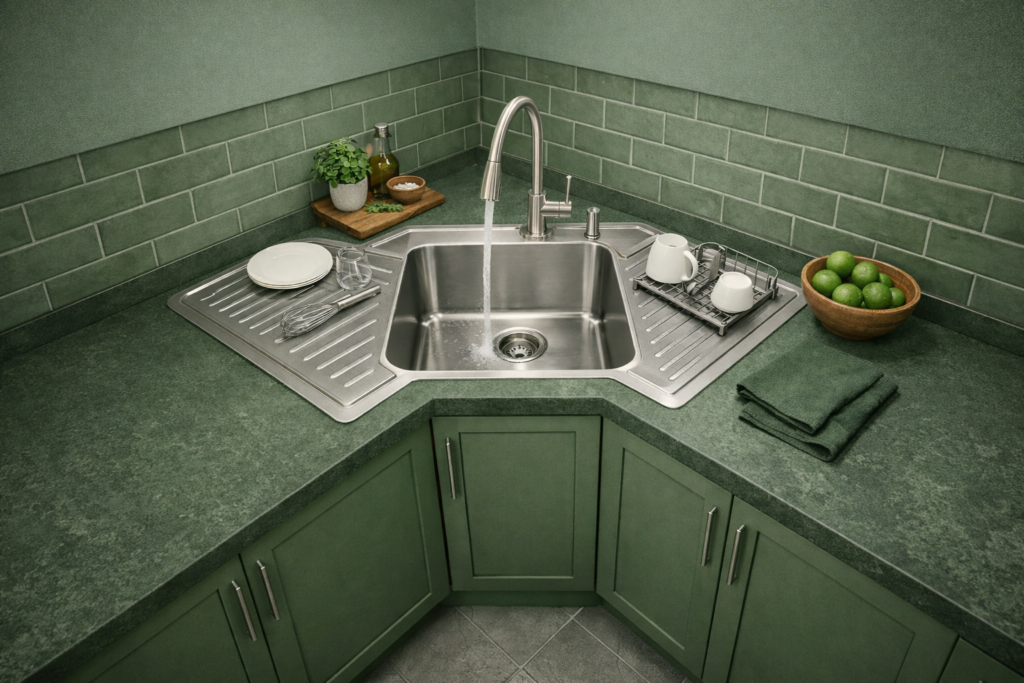
1) L-shaped corner sink with integrated drainboards
Choose an L-shaped corner sink to use the awkward corner space efficiently. You get a deep basin for washing and built-in drainboards that keep counters dry.
The integrated drainboards give you room to air-dry dishes without adding a separate rack. This layout works well in small kitchens and fits into L-shaped or U-shaped counters.
Look for durable materials like stainless steel or quartz composite for longer life. Pick a sink with the drainboard slope toward the basin so water flows back easily.
2) Undermount stainless steel corner sink
You save counter space by tucking an undermount stainless steel sink into a corner. The flush edge gives you more prep area and easier cleanup since crumbs sweep straight into the sink.
Stainless steel resists stains and handles heat, so it suits busy kitchens. Choose a 16- or 18-gauge bowl for a balance of durability and cost.
Pick a single deep bowl if you wash large pans, or an offset double bowl to keep prep and washing separate. Measure the cabinet carefully; corner cabinets need custom fittings or a lazy susan to make plumbing accessible.
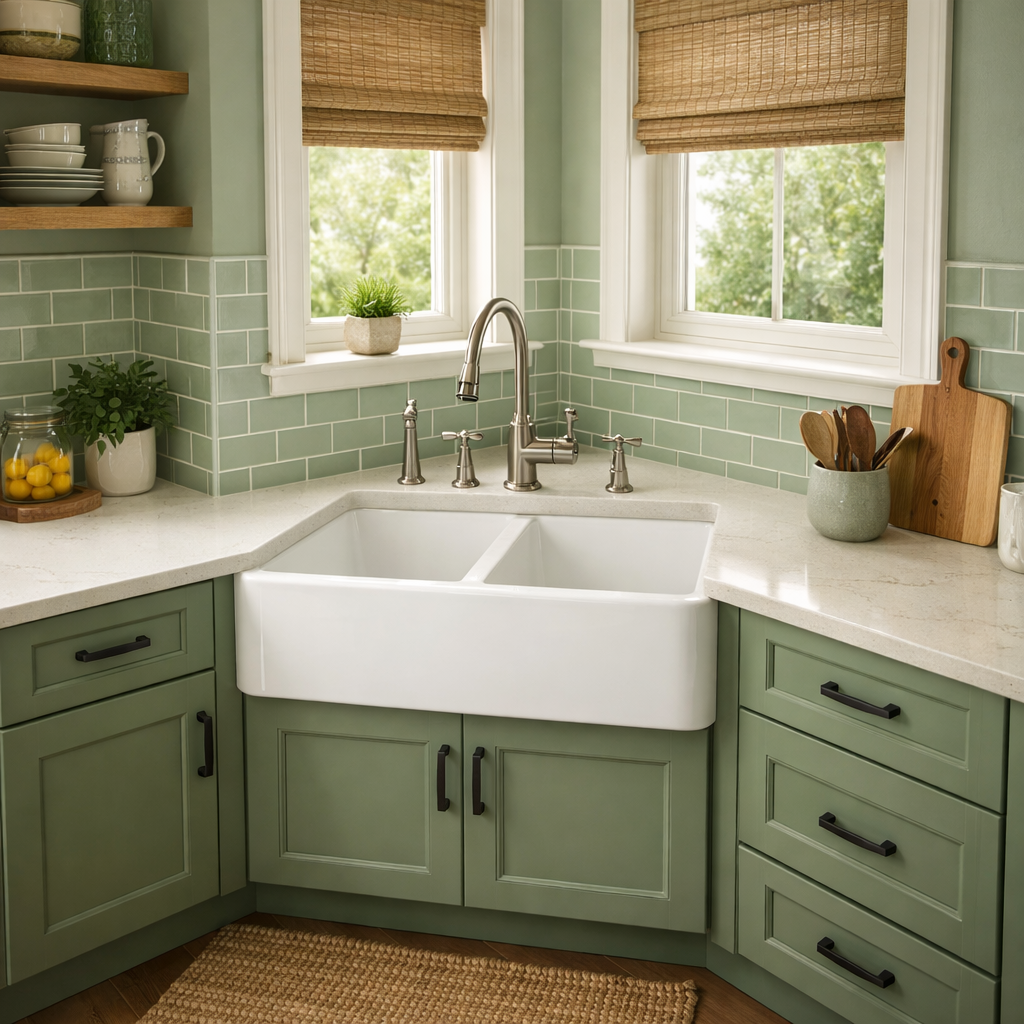
3) Farmhouse-style apron corner sink
A farmhouse apron sink brings a classic look to a corner layout and gives you a deep basin for large pans. You get strong visual character without losing practical space in a small kitchen.
Pick materials like fireclay or stainless steel for durability and easy cleaning. Match the apron front to your cabinets or let it stand out as a focal point.
Plan cabinet support and plumbing access since apron sinks change how the base cabinet works. A good installer will help keep the sink functional and easy to use in the corner.
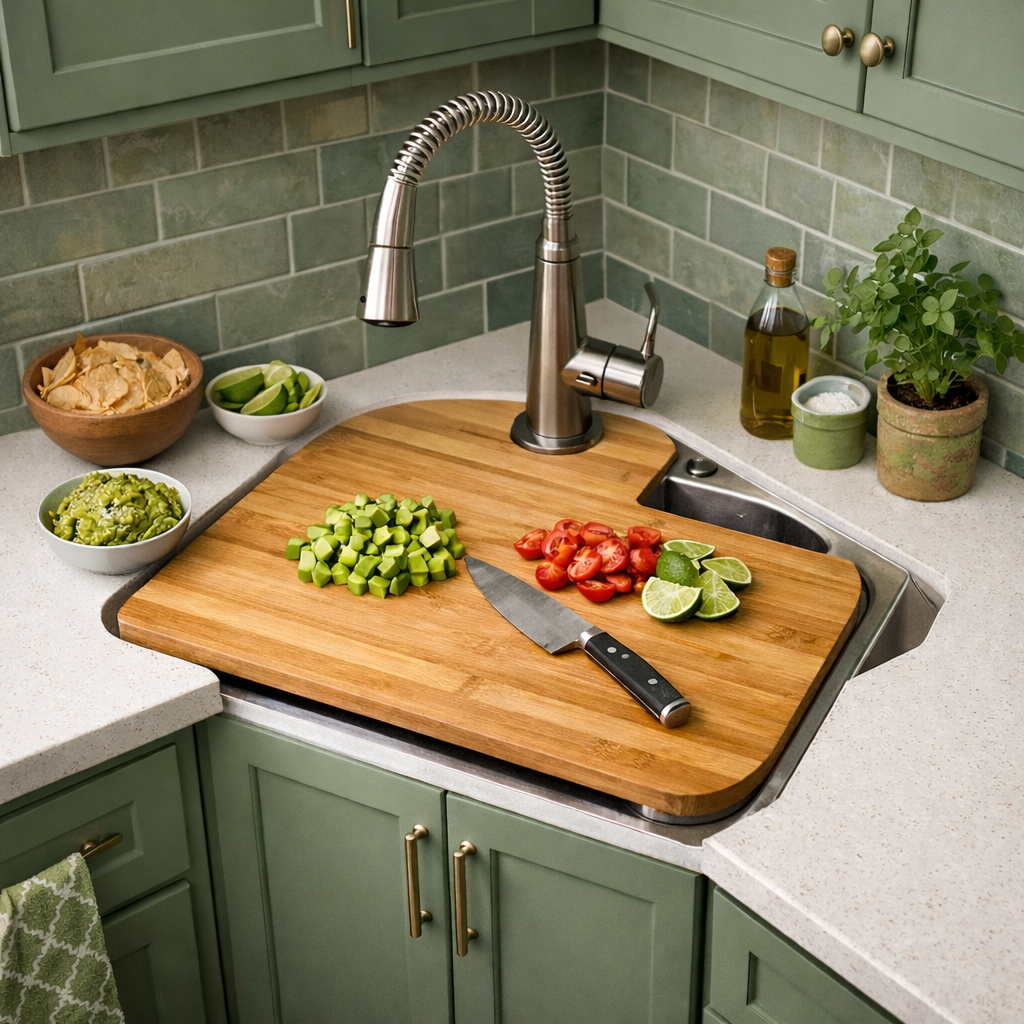
4) Corner sink with built-in cutting board cover
You get extra prep space when a cutting board fits over the sink bowl. This makes chopping and rinsing faster and keeps counters clear in a small kitchen.
Choose a board that slides or lifts easily so you can access the sink without trouble. Look for materials that resist water and are easy to clean.
A cover board can double as a matching work surface for meal prep or plating. Make sure the board size matches your sink and allows for comfortable reach to faucets and handles.
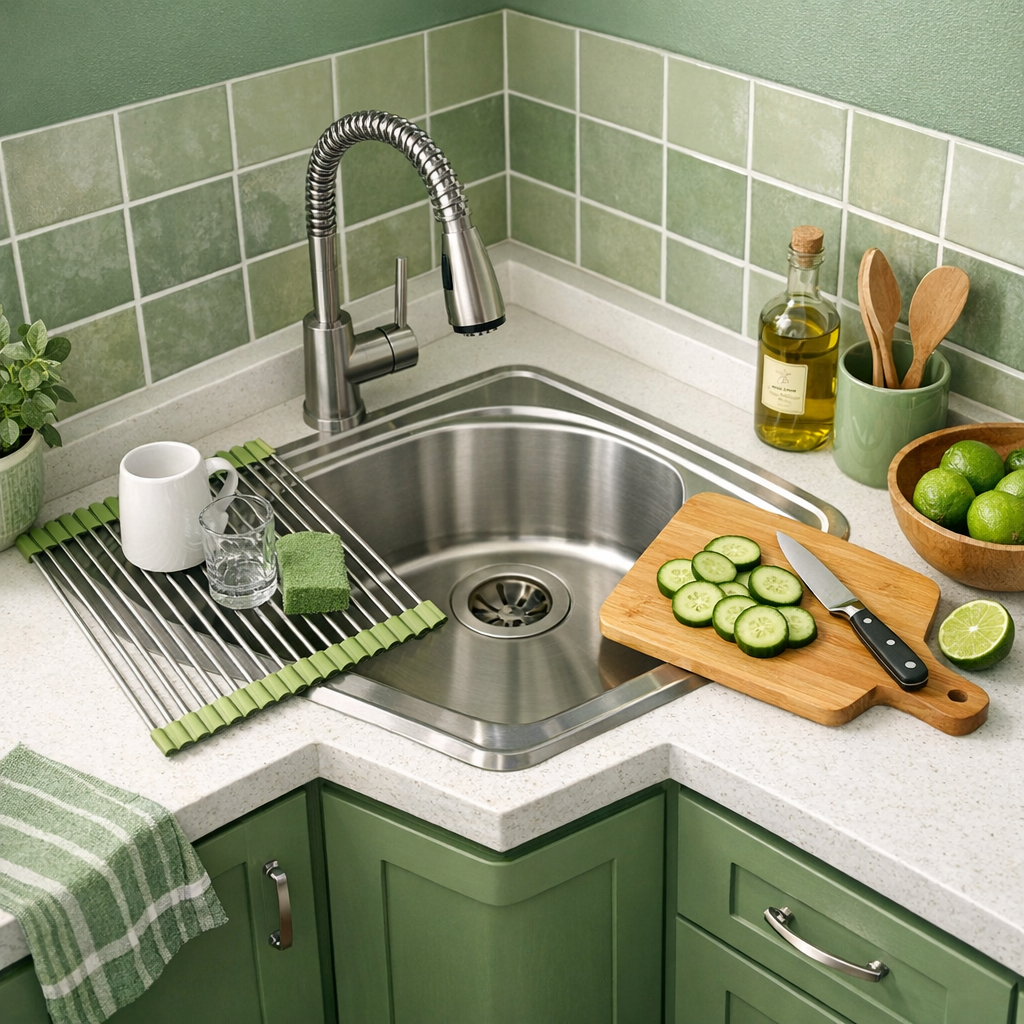
5) Compact single-bowl corner sink
A compact single-bowl corner sink saves space while still letting you wash dishes and prep food comfortably. You get a larger uninterrupted basin for pots and pans compared with divided sinks.
Choose stainless steel or porcelain for easy cleaning and durability. Look for a corner-specific shape or a diagonal bowl that fits cabinets 30–36 inches wide.
Pair the sink with a pull-down faucet and a shallow basin depth to reduce splashing and improve reach. Add a small cutting board or roll-up drying rack to increase your workspace without clutter.
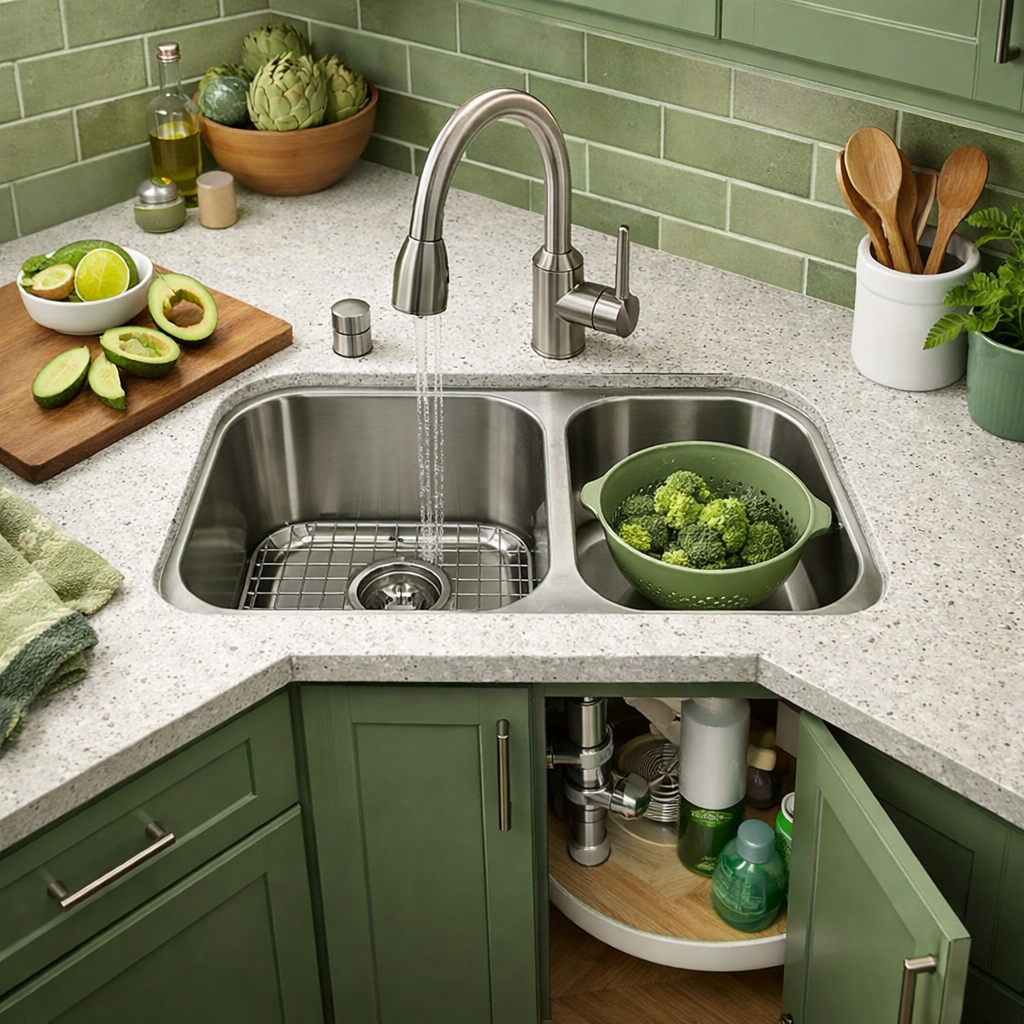
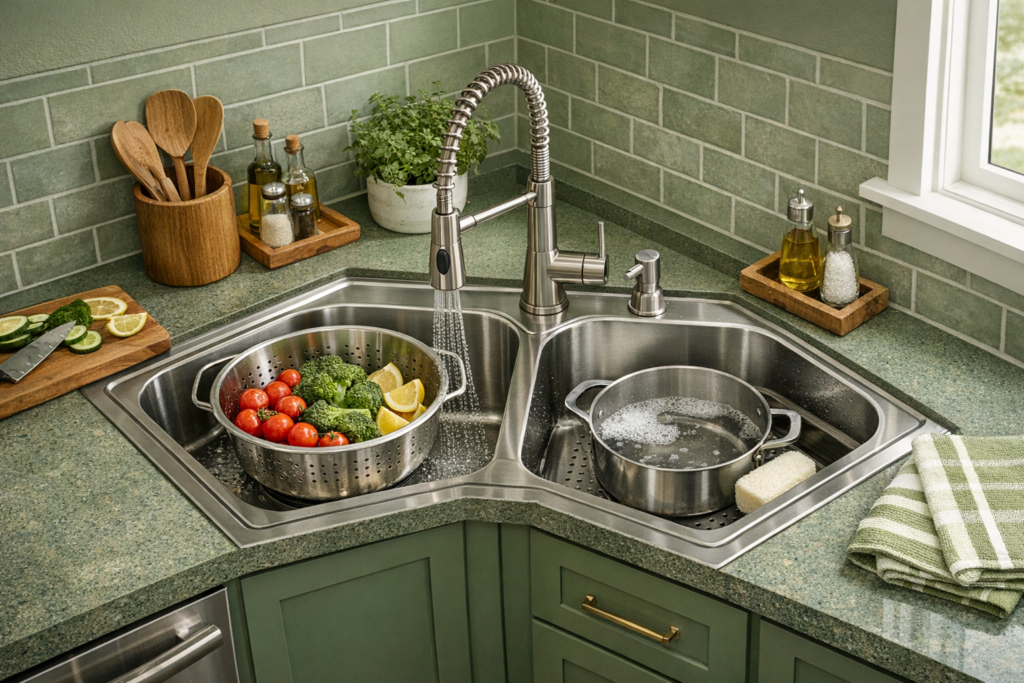
6) Double-bowl corner sink for multitasking
A double-bowl corner sink gives you two work areas in one compact spot. You can wash on one side and rinse or soak on the other, which speeds up tasks and keeps counters cleaner.
These sinks fit into 90-degree corners, saving countertop space in small kitchens. Choose different bowl sizes if you need room for pans or prep work.
Look for durable materials like stainless steel and sound-absorbing pads to reduce noise. Good faucets and accessories, such as a removable colander, make the setup more useful.
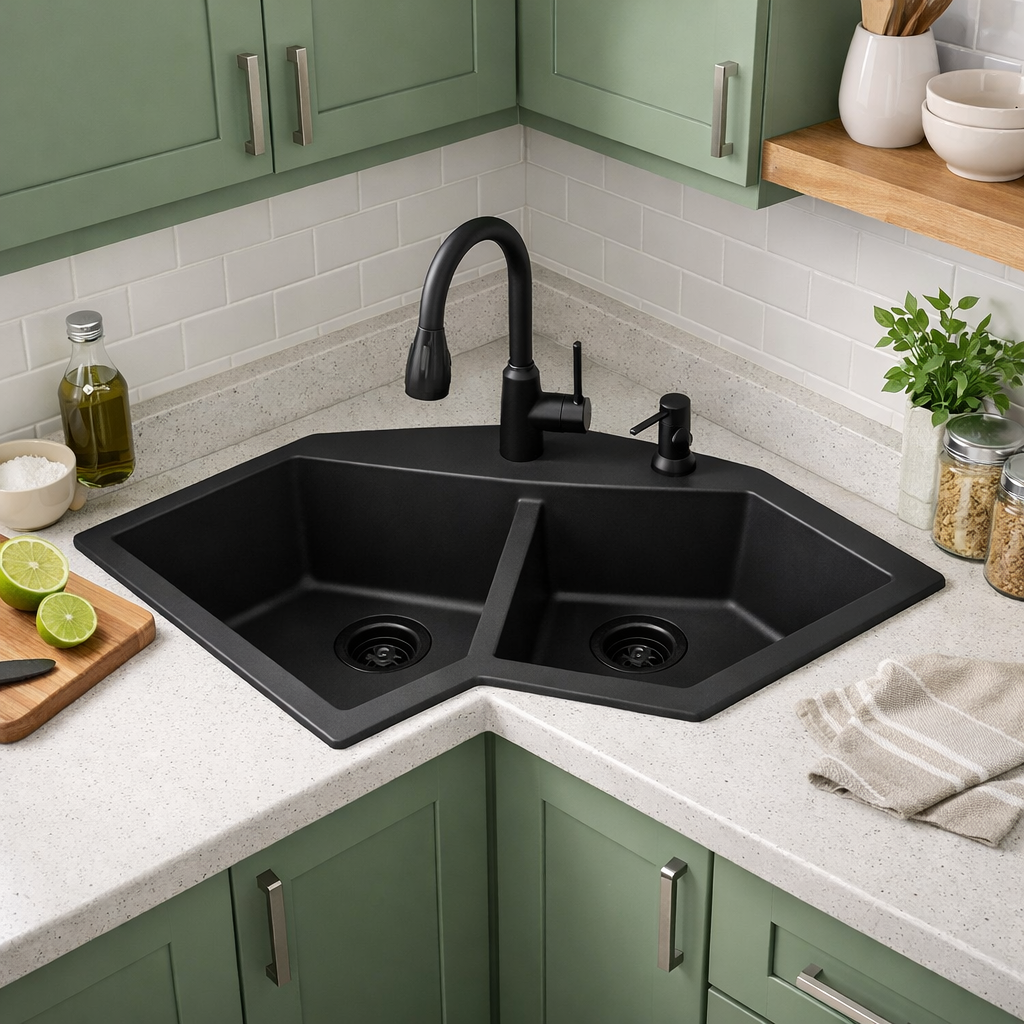
7) Matte black corner sink for modern kitchens
A matte black corner sink adds a clean, modern look that fits well with simple cabinetry and light countertops. You get a bold contrast without bright reflections or glare.
Choose a durable finish that resists scratches and water spots to keep the sink looking new. Pair it with black or brushed fixtures for a unified look, or with stainless accents for mild contrast.
Matte black hides stains better than glossy finishes, but you should still wipe it down regularly. Installation in the corner can free up counter space and improve your kitchen workflow.
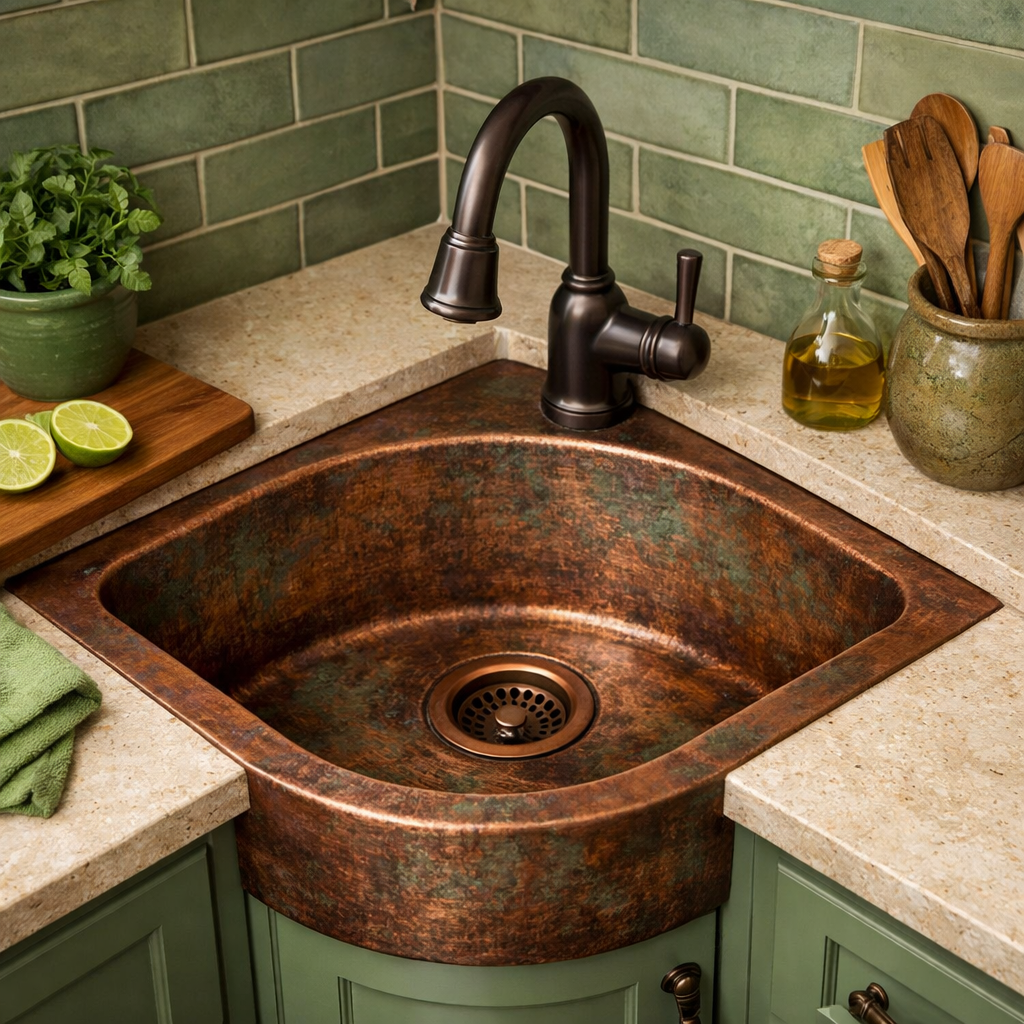
8) Copper corner sink with patina finish
A copper corner sink adds warm color and a unique look to your small kitchen. The patina finish gives the metal a soft, aged tone that hides scratches and water spots.
You can choose hand-hammered or smooth styles to match your cabinets. Copper conducts heat and develops character over time, so expect subtle color changes with use.
Install a matching drain and simple faucet to keep the corner area tidy. Routine gentle cleaning preserves the patina without removing the finish.
Design Considerations for Corner Sinks
You will need to think about where the sink sits, what material fits your cooking habits, and how plumbing will run. Each choice affects counter space, cabinet layout, and long-term use.
Optimal Placement in Small Kitchens
Place the sink where it keeps your work triangle tight. Position it at the corner so you have clear counter space on both sides for prep and for drying dishes. Leave at least 12–18 inches of usable countertop to one side for a landing area.
Install the sink so cabinet doors still open fully. A diagonal sink in a 36-inch corner base cabinet often works well, but measure your door swing and drawer clearances first. If you use a dishwasher, keep it within one cabinet space of the sink to shorten water lines and speed up loading.
Consider sightlines and lighting. Place the sink under a window if you have one, or add a focused light above it. For very narrow kitchens, a slightly offset corner sink can free a straight run of counter for small appliances.
Material and Finish Choices
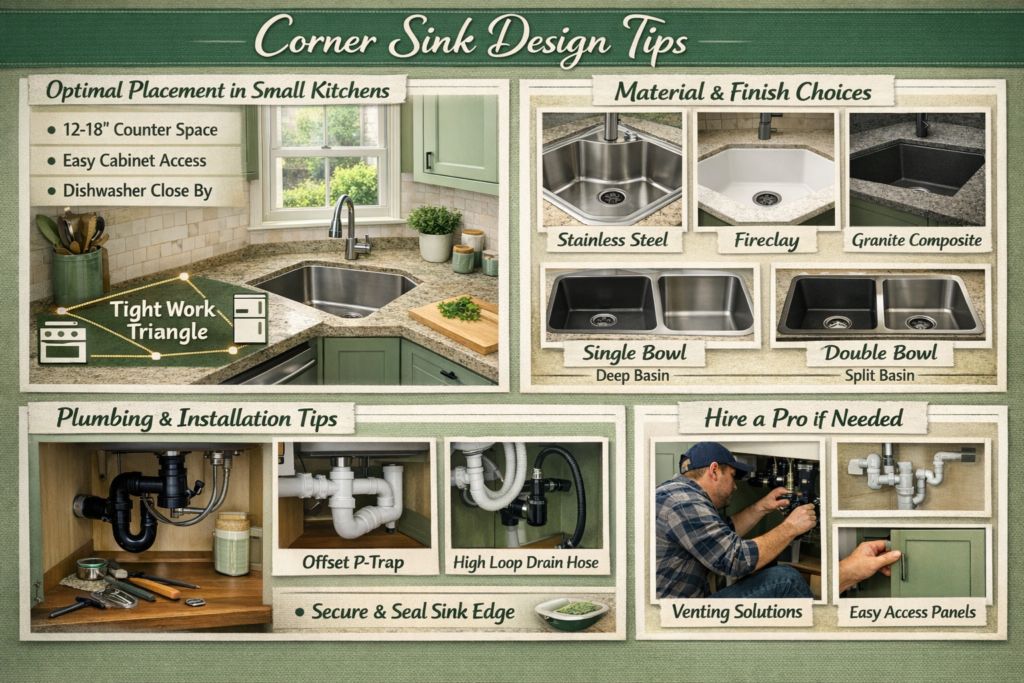
Choose materials that match your routine. Stainless steel resists stains and holds up to heavy use. Porcelain or fireclay offers a classic look but chips more easily. Granite composite hides scratches and reduces noise.
Pick a finish that hides water spots and fingerprints if you dislike constant wiping. Brushed stainless and matte composite finishes hide marks better than high-gloss surfaces. Coordinate the sink finish with your faucet finish to keep the corner area visually tidy.
Think about bowl configuration. A single deep bowl gives space for large pots. A double bowl with one smaller basin helps with rinsing and food prep. Measure cabinet depth and the underside clearance for garbage disposals before choosing bowl depth.
Plumbing and Installation Tips
Verify space under the corner cabinet for traps and water lines. Corner sinks often need offset or low-profile P-traps to avoid blocking cabinet storage. Sketch or photograph the cabinet interior to plan pipe routing.
Use a cabinet base designed for corner sinks or add reinforcement where the sink mounts. Secure the sink flanges and apply silicone where the sink meets the counter to prevent leaks. If you add a dishwasher, run a high loop on the drain hose to prevent backflow.
Hire a plumber for complex venting or if you must relocate supply lines. A pro can fit angle stops and braided supply lines in tight spaces and ensure the trap arm slope meets code. Keep easy access panels if you expect future repairs.
Maximizing Space and Functionality
Use compact, reachable storage and smart lighting to free counter space and make the corner sink easy to use. Place frequently used items where you can grab them without bending or shifting heavy pots.
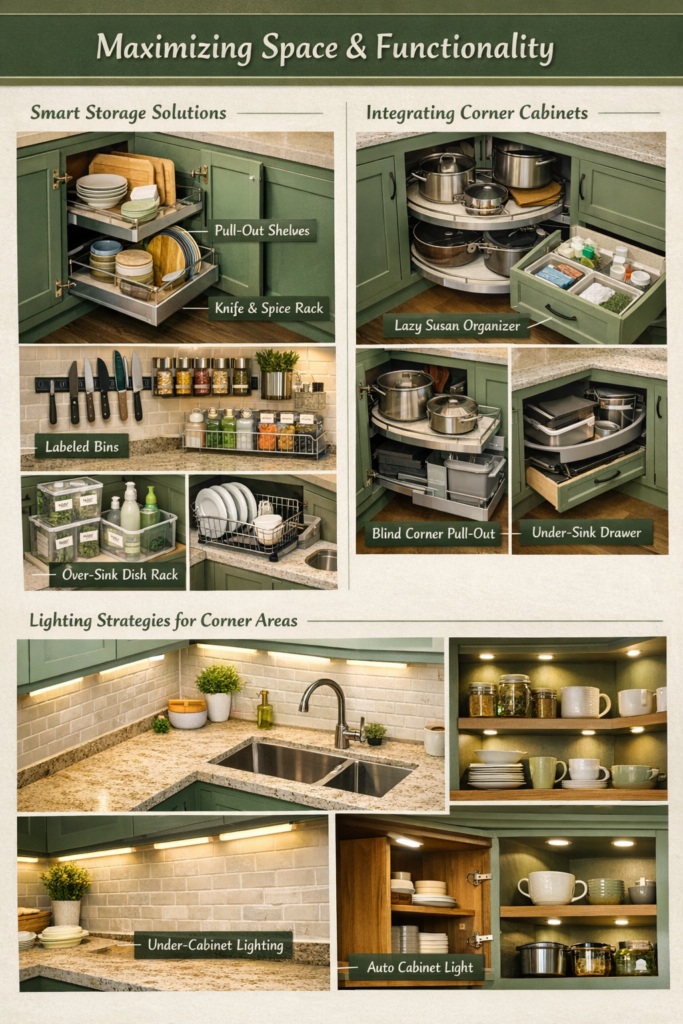
Smart Storage Solutions
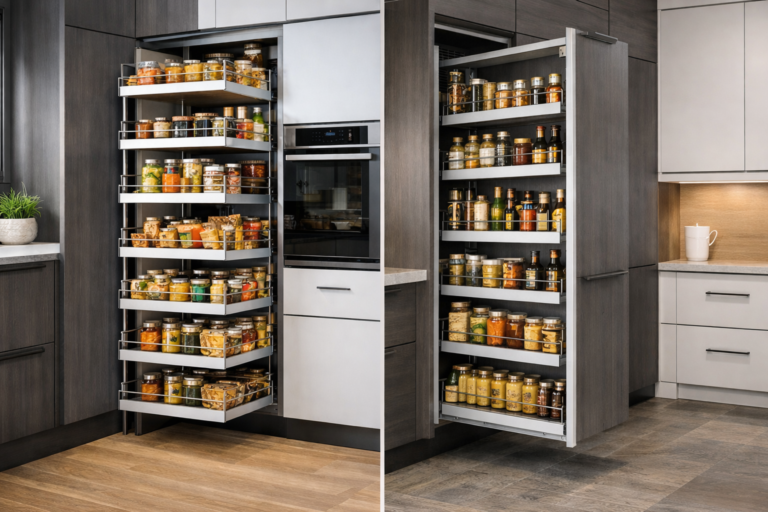
Fit pull-out trays or sliding baskets in the corner base cabinet to reach items at the back without crawling inside. Install a two-tier pull-out or lazy Susan arranged with shallow shelves so plates and cutting boards stay upright and visible.
Hang a small rail or magnetic strip on the backsplash to hold knives, scissors, or a spice rack. Keep a slim dish rack that folds flat or fits over one sink bowl so you don’t lose counter space when you need it. Use stackable, clear bins inside cabinets for cleaning supplies and label them so you grab the right bottle quickly.
Keep a narrow drawer under the counter for dishcloths, sponges, and scrubbers. That prevents clutter on the sink rim and makes daily cleanup faster.
Integrating Corner Cabinets
Choose an angled or diagonal corner cabinet sized to match your sink footprint for smoother plumbing runs and more usable storage. A diagonal cabinet with a hinged door gives direct access to larger pots and pans.
If you prefer pull-outs, pick full-extension hardware so each shelf slides completely out. Consider a blind-corner pull-out mechanism that brings the hidden corner forward. Soft-close hinges cut noise and protect fragile dishes.
Measure plumbing and garbage disposal placement before finalizing cabinet dimensions. Moving pipes slightly can allow deeper drawers or a drawer under the sink, which keeps trash or recycling tucked out of sight.
Lighting Strategies for Corner Areas
Install under-cabinet LED strips along both walls that meet at the corner to eliminate deep shadows where you work. Choose a 3000K–3500K color temperature for warm, true-to-color light that helps with food prep.
Add a small puck light inside the cabinet that activates when you open the door so you can find items in the back. If you have open shelves near the sink, place directional LED spots above them to highlight dishes and reduce glare on wet surfaces.
Use dimmable fixtures or two-circuit controls so you can run task lighting for prep and lower light for evening cleanup. This flexibility saves energy and helps prevent over-lighting a small space.