5 Small Bedroom Design Ideas for Modern Homes: Space-Saving Layouts and Stylish Finishes
You want a small bedroom that feels modern, calm, and efficient without sacrificing style. This article shows practical design moves that help you make the most of limited square footage while keeping a clean, contemporary look.
You’ll learn straightforward ways to expand visual space, add purposeful storage, and create a light, airy atmosphere that suits modern living. Apply these ideas to simplify your layout, boost functionality, and elevate the room’s aesthetic with minimal effort.
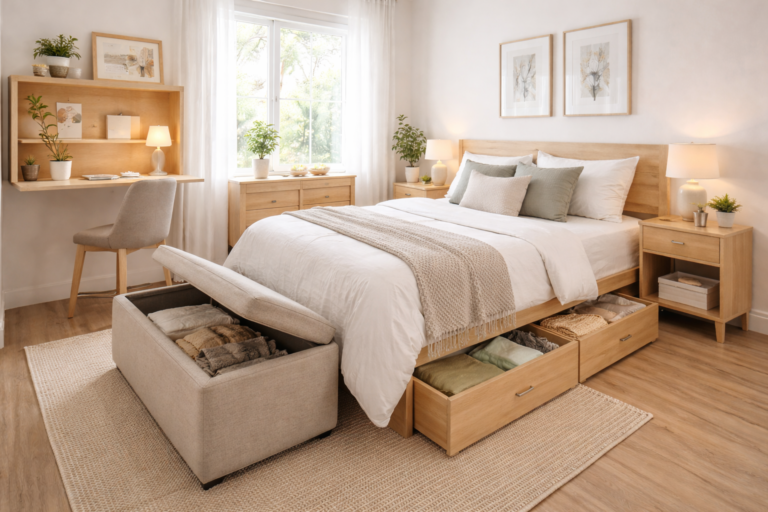
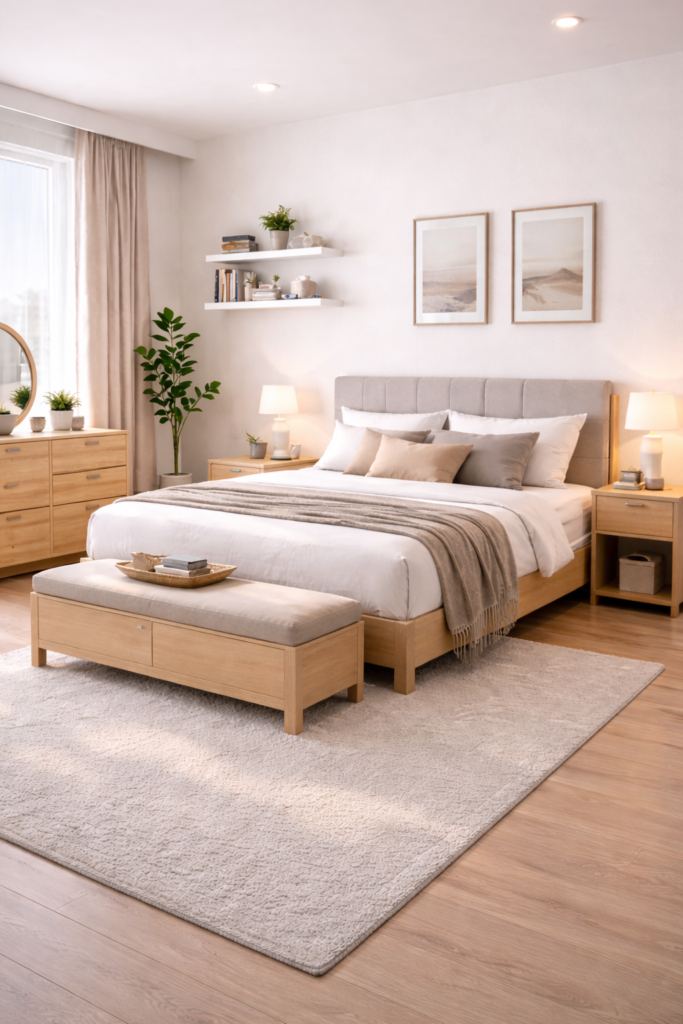
1. Use multifunctional furniture like storage beds to maximize space.
Choose a storage bed to reclaim floor space and reduce clutter without sacrificing comfort. Drawers or a lift-up base give you room for linens, seasonal clothes, or bulky items that would otherwise crowd closets.
Pair the bed with compact nightstands or wall-mounted shelves to keep surfaces clear. This creates a cleaner visual line and makes the room feel larger and more orderly.
Select pieces that match your routine—beds with built-in charging ports or headboard cubbies add convenience. Keep the palette simple to maintain a calm, spacious look while still gaining serious storage.
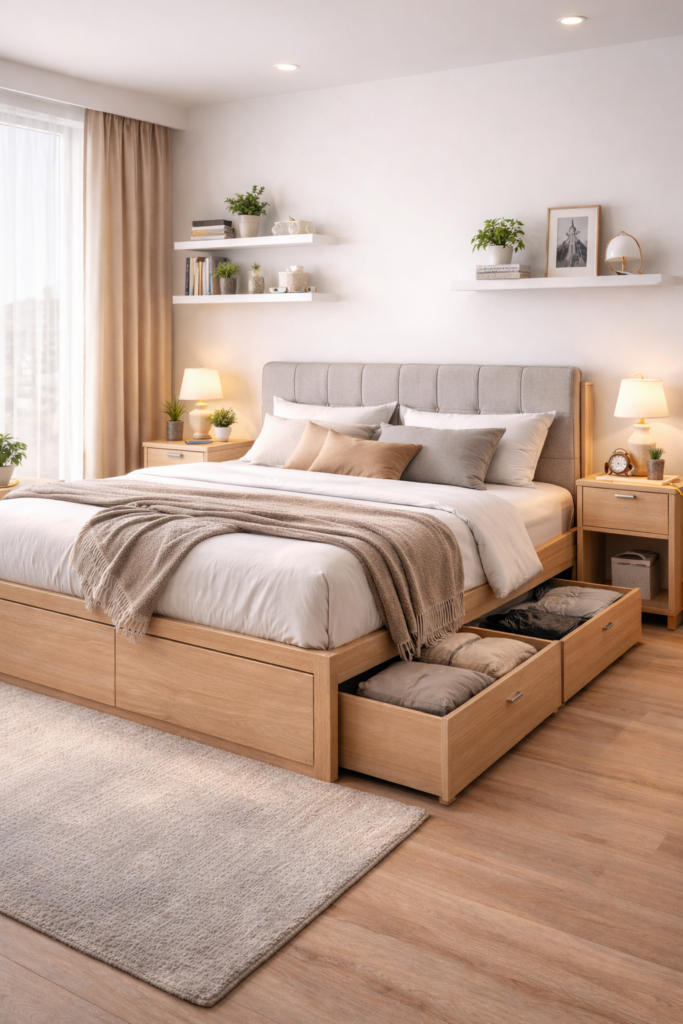
2. Incorporate light, neutral paint colors to create an airy feel.
Choose light neutrals—soft whites, warm greiges, or pale taupes—to reflect more light and make your small bedroom feel larger. These shades provide a calm backdrop that lets furniture and textiles stand out without competing for attention.
Test paint samples on different walls and observe them at various times of day. Undertones change with light; a beige with pink undertones can feel warmer than you expect in evening light.
Keep trim and ceilings a shade or two lighter than the walls to enhance height and openness. You can add subtle contrast through texture—linen curtains or a matte wall finish—while preserving the room’s airy atmosphere.
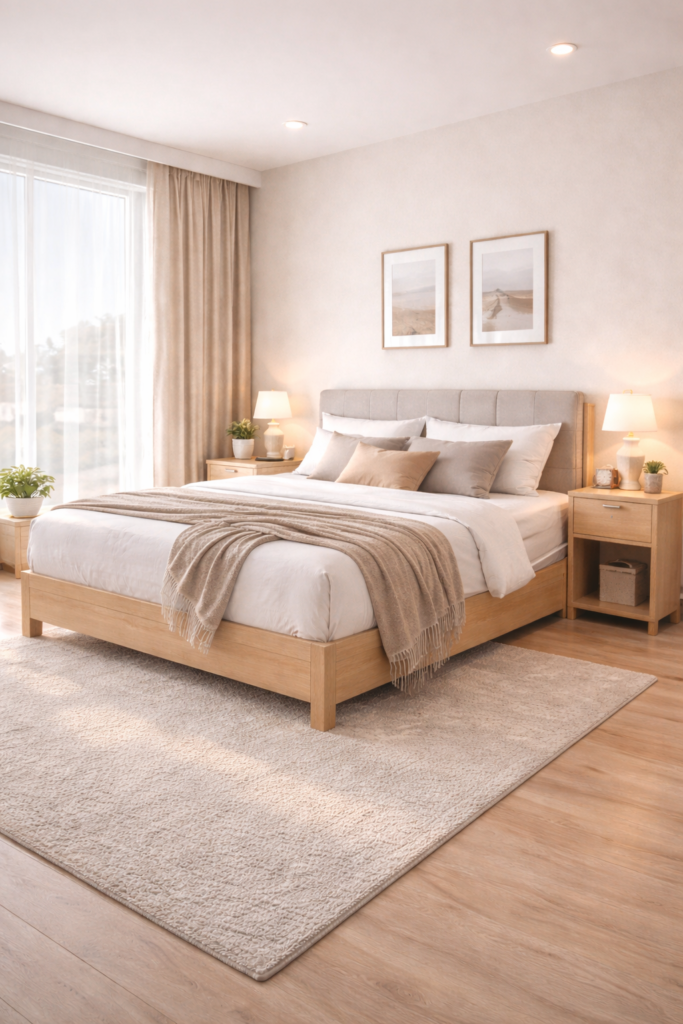
3. Install wall-mounted shelves to keep floors clear and add storage.
Mount shelves to free floor space and make the room feel larger. Wall-mounted shelving gives you storage without bulky furniture.
Choose floating shelves or slim brackets to match your room’s style and load needs. Measure and plan spacing to keep items accessible and balanced visually.
Anchor into studs for heavier items; use proper anchors for drywall when studs aren’t available. Keep heavier objects lower and lighter decor higher to maintain stability and a tidy look.
Use narrow shelves for books and trays for small items to avoid clutter. A few well-placed shelves can organize essentials while enhancing the bedroom’s modern aesthetic.
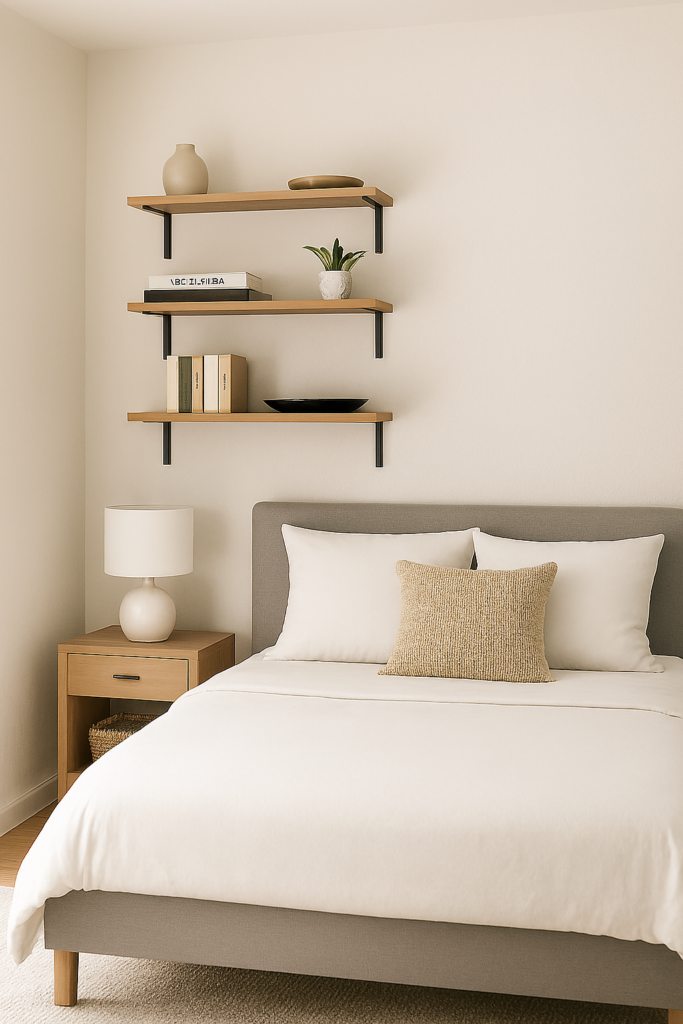
4. Opt for minimalist decor to maintain a clutter-free environment.
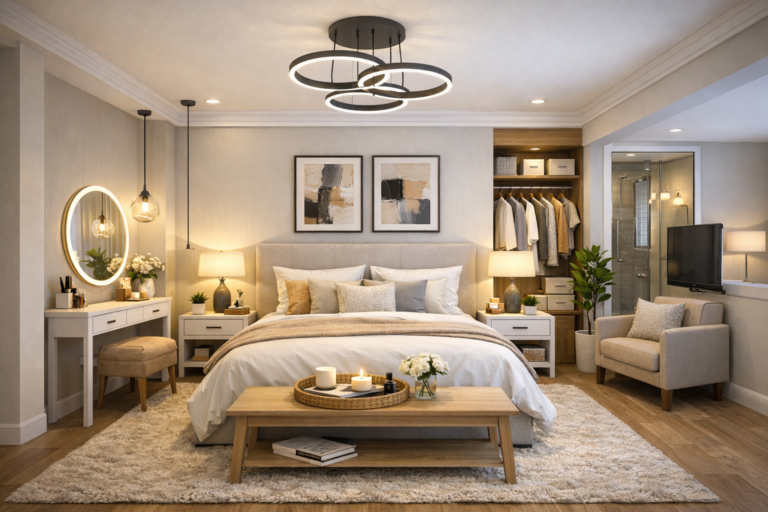
Choose furnishings with clean lines and limited ornamentation to keep visual clutter low. A low-profile bed and a slim nightstand make the room feel more open without sacrificing function.
Limit visible items to essentials: lamp, a book, and one personal object. Store the rest in closed drawers or under-bed storage so surfaces stay clear and calm.
Use a neutral palette with one or two accent tones to create cohesion. Consistent colors reduce visual noise and make small spaces appear larger.
Prioritize multi-functional pieces like a storage bench or floating shelves. They give you needed function while preserving floor space and a tidy look.
5. Choose mirrors strategically to enhance natural light and space perception.
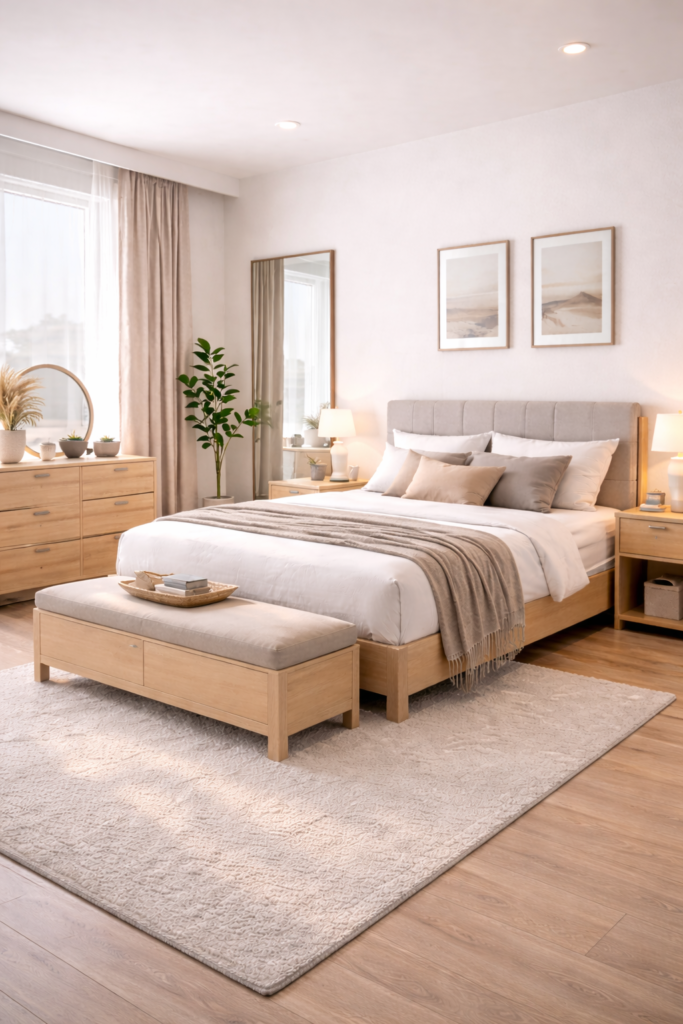
Position a mirror opposite or adjacent to a window to bounce daylight into darker corners and make the room feel brighter. Even a modest mirror can significantly increase perceived light without extra electricity.
Use full-length or tall vertical mirrors to add perceived height, or place a mirror at the end of a short wall to create depth. Think about scale: a mirror that matches nearby furniture keeps proportions balanced.
Frame style matters less than placement, but a simple, slim frame suits modern rooms and prevents visual clutter. Angle mirrors slightly to catch and redirect views rather than reflect the bed directly for better comfort and flow.
Maximizing Space Efficiency
Focus on pieces that serve more than one purpose and storage that uses every inch—floor-to-ceiling, under-bed, and behind doors. Prioritize items that fit your room’s measurements and keep circulation clear.
Multi-Functional Furniture Solutions
Choose a bed with built-in drawers or a platform base to reclaim under-bed volume for seasonal clothing or linens. If you prefer a visible base, use a storage ottoman at the foot of the bed for blankets and a surface for seating.
Consider a wall-mounted fold-down desk that doubles as a nightstand when closed. When open, it gives you a 30–36 inch work surface without occupying floor space permanently.
Invest in a sofa-bed or a daybed with trundle if you need occasional guest sleeping space; modern mechanisms make conversion fast and comfortable. For wardrobes, select a unit with adjustable shelving and a pull-out rod so you can switch between folded storage and hanging capacity as your needs change.
Smart Storage Strategies
Map your room and measure vertical zones before buying storage. Install floating shelves at eye level for books and decor, and higher shelves for boxes you access less often. Use clear labeled bins on high shelves so you can identify contents quickly.
Exploit behind-door space with a shallow hanging organizer for shoes, accessories, or cleaning supplies. Place drawer dividers and slim trays inside a dresser to keep socks, jewelry, and small electronics tidy.
Keep a dedicated charging tray near the bed to prevent cables from spreading across surfaces. Finally, group like items together and purge quarterly; fewer items make every storage solution more effective.
Enhancing Modern Aesthetics
Choose a tight palette and targeted light sources to make the room feel larger, cleaner, and more intentional. Pair practical storage and pared-back decor so surfaces stay uncluttered and focal elements stand out.
Color Palettes and Lighting
Pick a base of two neutral tones—for example, warm white (SW 7006) and soft gray (Benjamin Moore Stonington Gray)—to create a calm backdrop. Add one accent color in a measured way: a matte navy throw, a moss-green pillow, or a terracotta bedside lamp. Limit patterned fabrics to one small element, like a runner or cushion, to avoid visual clutter.
Layer lighting: a recessed overhead fixture for general light, a dimmable bedside sconce for reading, and a single directional floor lamp for task lighting. Use 2700–3000K warm LEDs for living comfort; swap to 3000–3500K if you prefer a crisper, modern feel. Install dimmers and choose bulbs with CRI 90+ to keep colors accurate and materials true.
Minimalist Décor Tips
Keep furniture low-profile and multi-functional: a platform bed with shallow drawers or a headboard shelf reduces the need for extra pieces. Select two clean-lined nightstands rather than matching bulky dressers to save floor space and maintain balance. Opt for leggy furniture to reveal floor area and improve perceived size.
Limit surfaces to one curated vignette per horizontal plane—a lamp, one book, and a small plant on the bedside table; a single framed print above the bed. Use hidden storage like under-bed bins or an integrated closet system to keep textiles and extras out of sight. Choose textiles in solid colors and tactile weaves to add warmth without visual noise.