Before & After: Modern Home With Indoor Plants That Looks Fresh and Stylish
A room-by-room guide to greening your space — naturally
There is something almost magical about what a handful of well-placed plants can do to a home. Spaces that once felt closed-off, corporate, or just plain boring suddenly exhale. Colors warm up. Air feels cleaner. And guests who walk in for the first time always ask the same thing: “What did you do in here?”
This before-and-after guide walks through real transformations — room by room — showing exactly how indoor greenery, smart herb garden setups, and creative planting ideas turn ordinary modern homes into places that feel genuinely alive. Whether you are starting from scratch or already have a few pothos trailing off a shelf, there is something here for you.
The Living Room: From Sparse to Lush
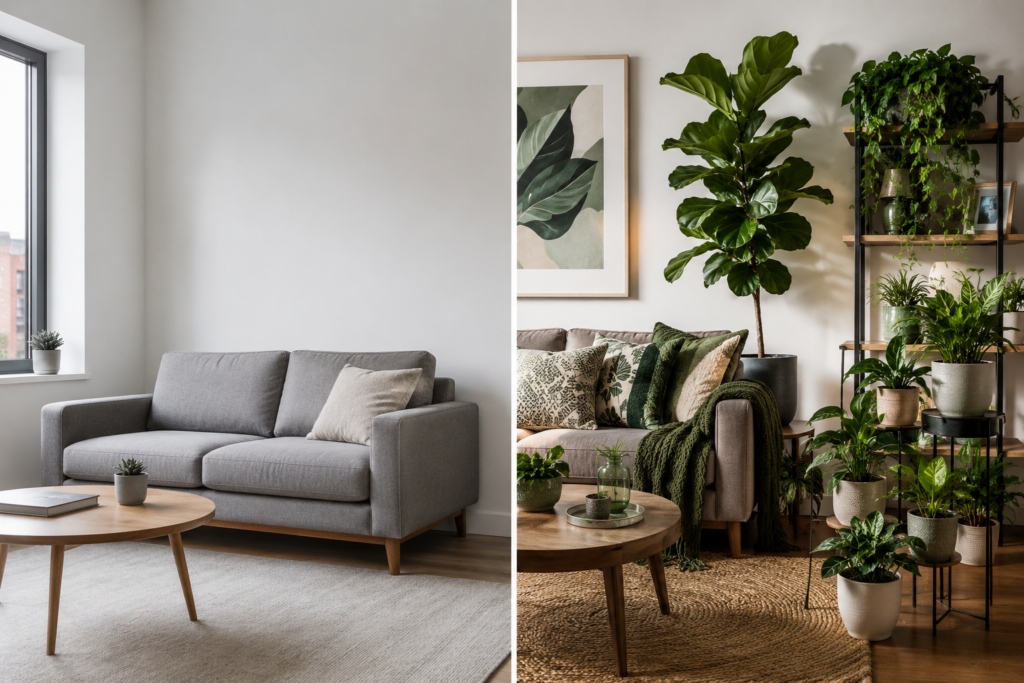
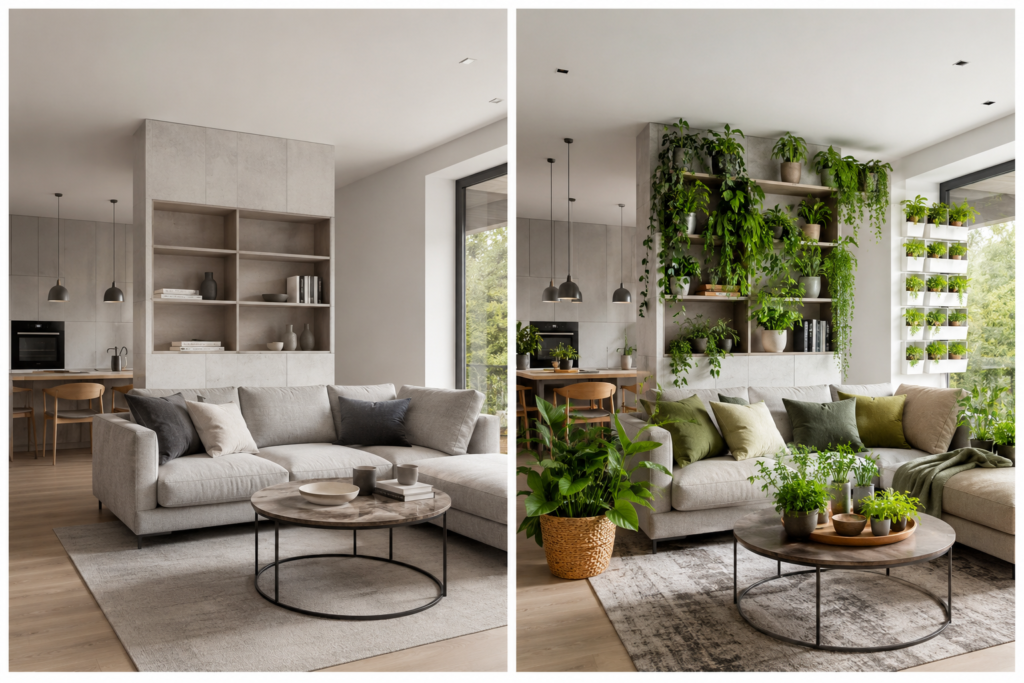
Before
Bare white walls, a grey sofa, one sad succulent on the windowsill. Feels like a hotel room nobody ever checked into.
&
After
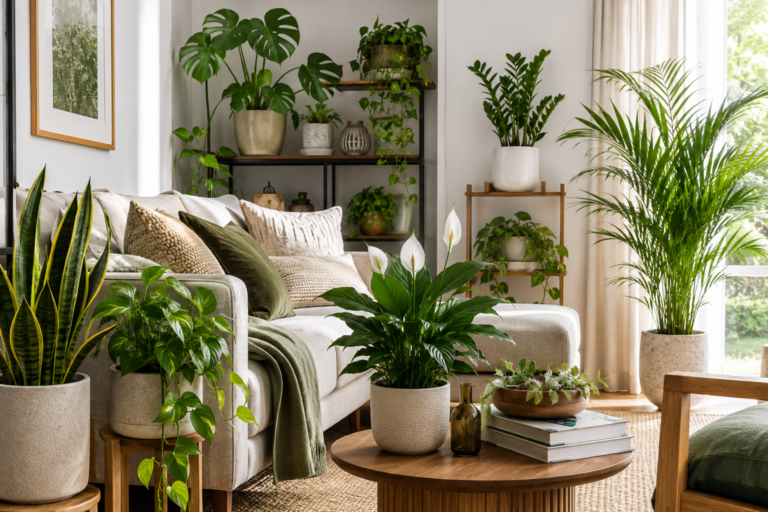
A trailing Pothos plant on the bookshelf, a tall fiddle-leaf in the corner, and a cluster of small pots on a plant stand. Warm, textured, alive.
The living room is the first place most people tackle, and rightfully so — it offers the most visual real estate. The trick is layering. A single towering floor plant anchors the room, while smaller inside plants on surfaces and shelves add rhythm and repetition. The most effective transformations use three levels: floor, surface, and elevated (hung or shelved high).
For the best indoor plants to anchor a living room, consider the Pothos plant, Monstera deliciosa, or a Bird of Paradise. All three are forgiving, striking, and genuinely thrive with minimal fuss. Growing plants indoors does not have to mean daily watering schedules; these varieties are as low-maintenance as they come. Focus on plant decor indoor styles that complement your existing furniture tones rather than fight them — deep greens against warm timber, pale sage against concrete grey.
Quick Win Cluster odd numbers of pots together (3 or 5) for an arrangement that reads as intentional rather than accidental. A single plant can look lonely; three always looks designed.
The Kitchen: Building Your Indoor Herb Garden
This is where the transformation gets genuinely useful. A well-planned indoor herb garden does double duty — it looks beautiful and feeds you. The before version of most kitchens has empty windowsill space, dead corners, and maybe a single store-bought basil plant wilting in a plastic pot. The after version smells incredible and saves you money every single week.
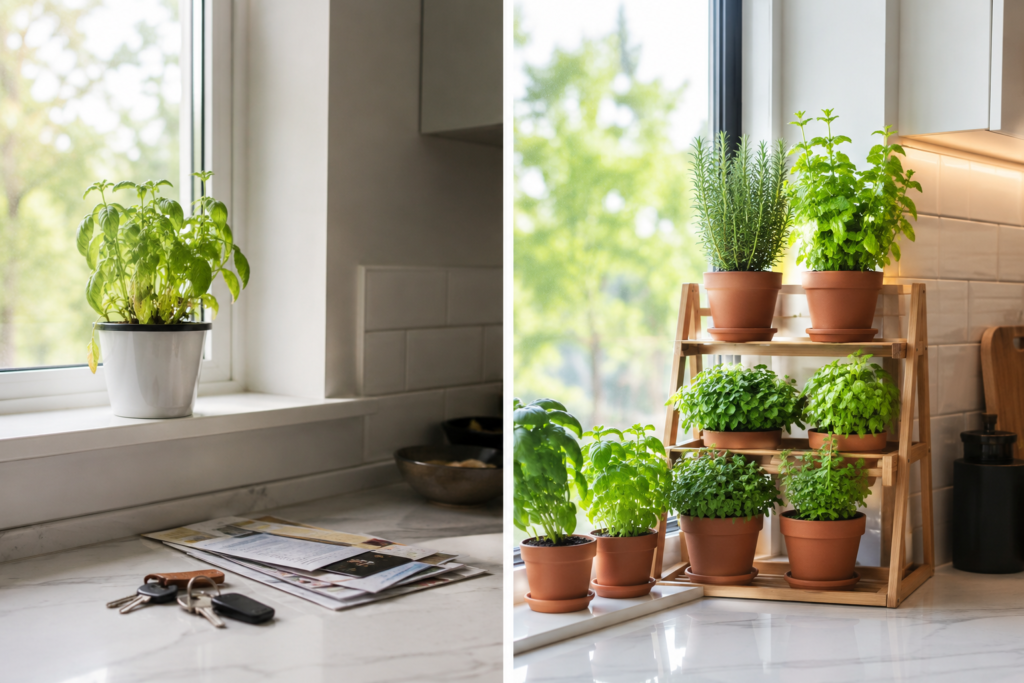
Before
One pot of supermarket basil, yellowing fast. A window ledge covered in forgotten keys and mail.
After
A tiered wooden shelf holds rosemary, mint, oregano, and basil in matching terracotta pots. The window ledge is now the most used surface in the kitchen.
Herb Garden Ideas That Actually Work
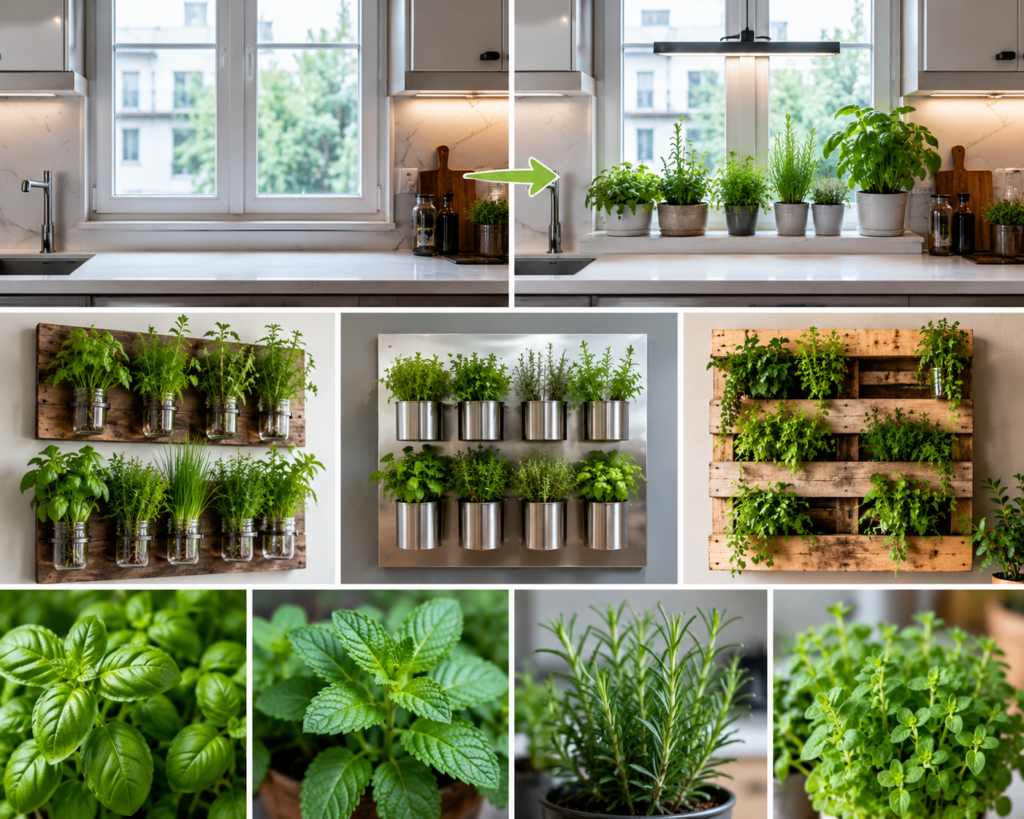
The best herb garden ideas for a modern kitchen start with the windowsill. A windowsill herb garden needs at least four to six hours of direct light — south or west-facing windows are ideal. If your kitchen faces north, do not despair: a simple grow light mounted underneath a cabinet fixes the problem entirely. Growing herbs indoors with supplemental lighting has become completely mainstream, and the results are outstanding.
For apartment dwellers or anyone short on counter space, a wall herb installation is the most stylish solution. Mounted wooden boards with small clips, magnetic containers on a metal panel, or even repurposed pallets all work beautifully as a vertical herb garden that doubles as kitchen wall art. This approach, sometimes called a modern kitchen herb wall, keeps herbs at eye level, makes harvesting a one-second job, and creates a genuinely beautiful focal point above the stove or sink.
🌿
Basil
Loves warmth & sun. Pinch tops for bushiness.
🌱
Mint
Grows fast. Keep in its own pot to contain it.
🪴
Rosemary
Mediterranean — loves dry soil & full sun.
🍃
Oregano
Drought-tolerant. Perfect for beginners.
DIY Herb Garden Projects
You do not need to spend a lot to make it look like you did. One of the most satisfying diy herb garden approaches uses mason jars mounted to a piece of reclaimed wood. Drill drainage holes in the jar lids, fill with well-draining potting mix, plant your herbs, and hang the board on the kitchen wall. This indoor herb garden diy project takes about two hours, costs under twenty dollars in materials, and looks like something from a design magazine. If you prefer ceramic, a diy herb planter made from a length of timber with evenly spaced holes drilled through it (each holding a small terracotta pot) achieves the same editorial aesthetic with zero woodworking skill required.
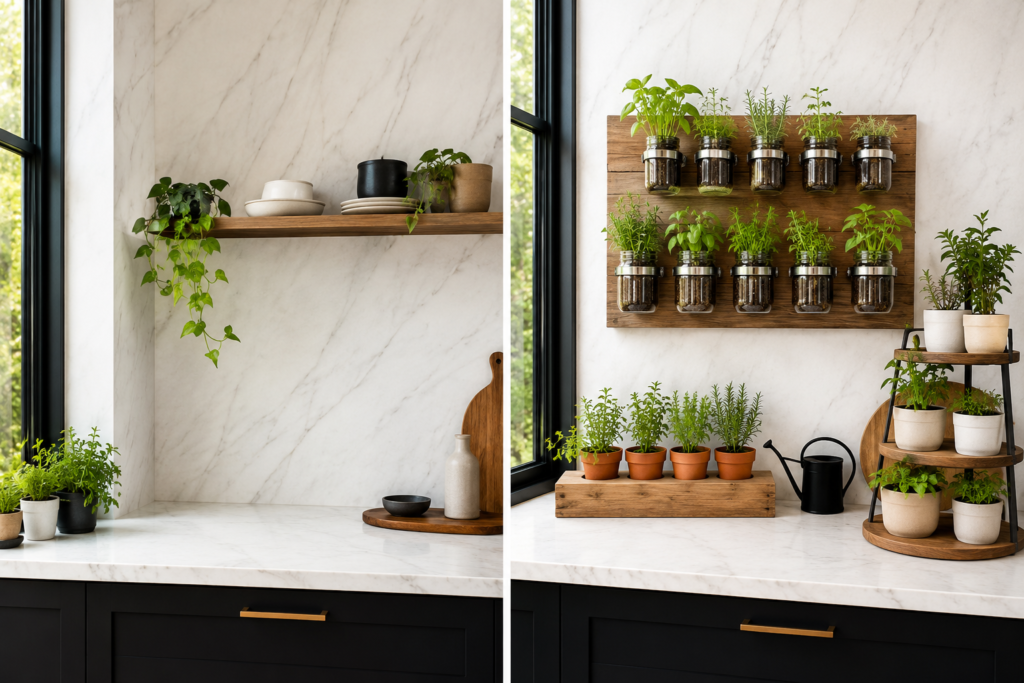
For those who want a polished ready-made system, a tiered herb planter ideas stand is worth every cent. The ones with three staggered shelves allow for different light levels — sun-lovers on top, shade-tolerant herbs below — and double as genuine kitchen decor. Pair this with the herb garden design principle of keeping similar pot materials throughout (all terracotta, all white ceramic, all dark matte) for a look that feels cohesive rather than chaotic.
🌿
Self-Watering Herb Planter with Grow Light
Perfect for indoor herb garden ideas — keeps herbs hydrated and lit even in low-light kitchens. A brilliant kitchen counter herb garden starter.Shop on Amazon
🪵
Wall-Mounted Wooden Herb Planter
A stunning wall herb garden solution for modern kitchens. Holds up to six small pots and mounts with two screws — no tools beyond a drill needed.Shop on Amazon
The Balcony & Outdoor Spaces: Herb Garden Outdoor Ideas
If you have outdoor access — even just a small balcony — the possibilities expand dramatically. A herb garden outdoor setup gets more light, more airflow, and typically produces herbs that are twice as vigorous as their indoor counterparts. The before version of most apartment balconies is a graveyard of good intentions: empty pots, a dead fern, a chair nobody sits in. The after version is a miniature kitchen garden that supplies fresh produce all season long.
For small outdoor spaces, vertical is your best friend. A raised herb garden beds system built from cedar timber sits beautifully against a balcony wall and can hold four to six different herbs with room to breathe. If building is not your thing, a repurposed wooden pallet leaned against the wall makes an outstanding pallet herb garden — simply staple landscape fabric to the back of each slat section, fill with compost, and plant. It looks rustic, costs almost nothing, and grows extraordinarily well.
“A well-planted balcony is the most underused room in any apartment. Treat it like an outdoor kitchen and it will repay you a hundredfold.”
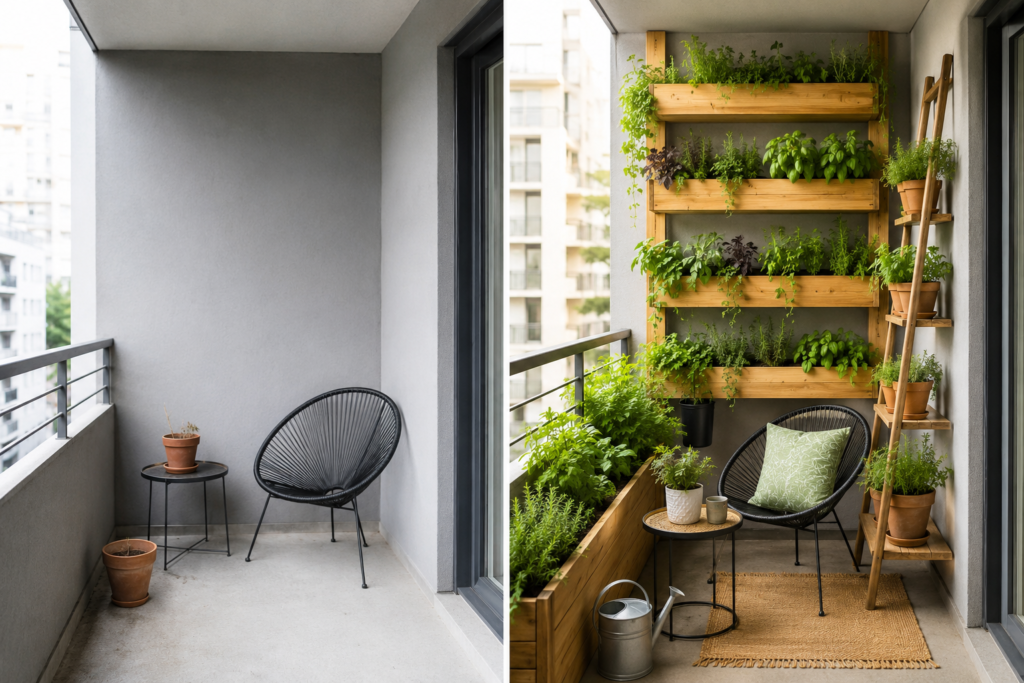
Herb planter ideas outdoors can also include tiered ladder planters — the kind that lean against a wall and hold four or five progressively smaller pots at each rung. Pair this with a diy herb garden outdoor raised box made from two fence planks and some corner brackets for a small-space setup that punches well above its weight. Herbs like growing mint in pots outdoors particularly benefit from this arrangement, since the contained root zone prevents the mint from spreading into neighboring pots.
The Bedroom & Bathroom: Calming Green Corners
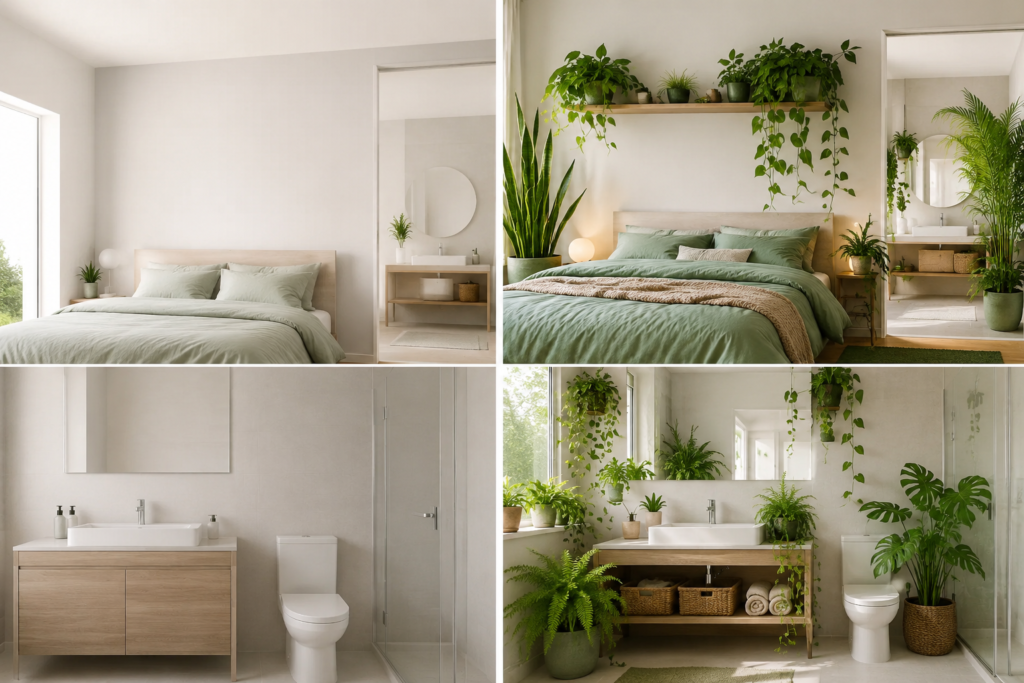
The rooms most people overlook for planting are often the ones that benefit most. A bedroom or bathroom with even one or two well-chosen plants takes on an entirely different character — spa-like, restorative, and genuinely relaxing. Household plants in these spaces do not need to be elaborate; a single trailing Pothos on a high shelf or a fern on the bathroom vanity is enough to shift the atmosphere entirely.
For the bedroom, the focus should be on best indoor plants that improve air quality and do not produce pollen that might irritate sleepers. Snake plants, peace lilies, and spider plants are all excellent choices. These are also prime candidates for creative plant propagation ideas — snake plants and spider plants produce offshoots readily, meaning one purchased plant can eventually fill an entire home for free. A diy self watering planter bottle made from a repurposed plastic bottle works beautifully for propagating cuttings; the constant moisture reservoir keeps success rates high without daily attention.
💡Full-Spectrum LED Grow Light Bar
Ideal for growing plants indoors in rooms without strong natural light. Mounts under shelves and runs on a timer — set and forget.Shop on Amazon
Stylish Plant Decor: The Details That Make the Difference
The difference between a home that looks curated and one that looks cluttered often comes down to the vessels. Plant pot decoration ideas have exploded in recent years — from hand-painted terracotta to woven seagrass basket planters to sleek matte-black ceramic. The rule of thumb: match the material to the room’s existing palette and textures, not just its color scheme. A rattan pot feels at home in a boho living room; a thin-rimmed white cylinder suits a minimalist kitchen; an aged terracotta cluster suits a warm, earthy dining space.
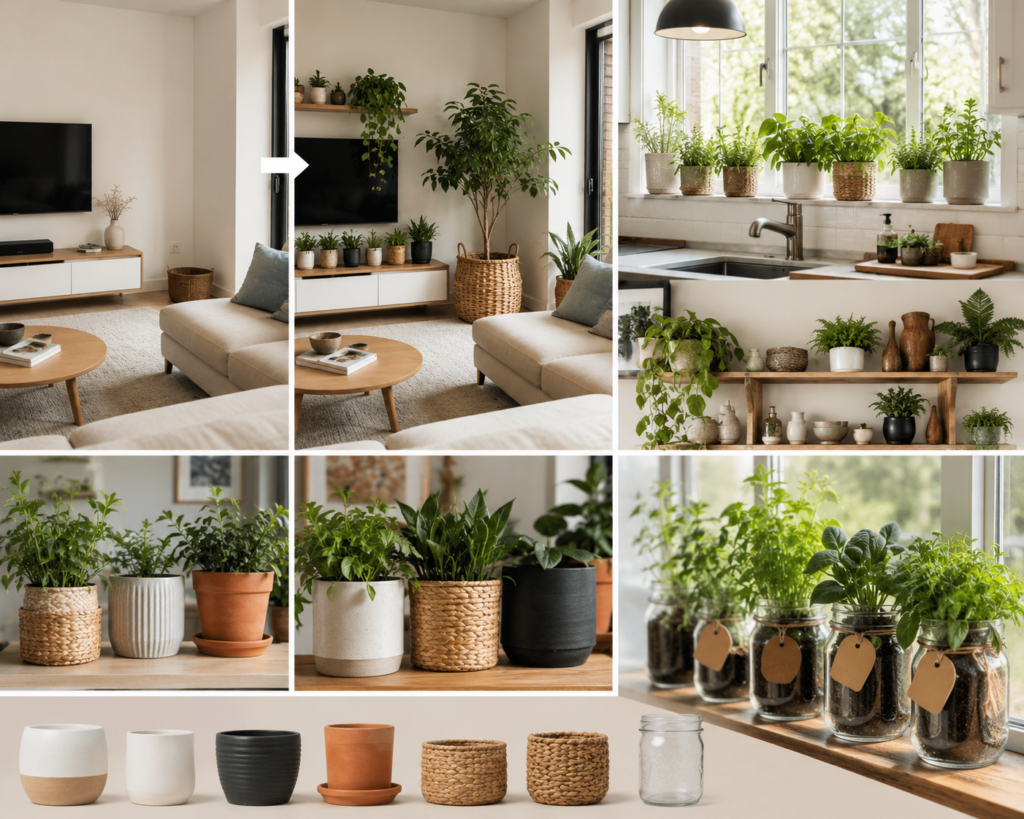
For a cohesive indoor gardening aesthetic throughout the home, choose two or three pot styles and repeat them across rooms. This repetition creates visual rhythm — the same satisfying sense of order you get from matching towels in a bathroom, but for plants. Mixing pot materials (some clay, some ceramic, some woven) within that palette adds texture without chaos. Small details like matching saucers, consistent drainage stones, or even the direction plants trail can elevate a collection from “a bunch of pots” to something that looks genuinely designed.
Growing herbs in mason jars is another approach that achieves both function and beauty simultaneously. A row of mason jar herb garden containers on a window ledge or kitchen shelf — each labeled with a piece of twine and a small tag — looks charming in photographs and works beautifully in practice. The glass allows you to monitor soil moisture and root development easily, and the transparent walls catch afternoon light in a way that no opaque pot can match.
Design Tip Before buying a new pot, hold the plant next to it in the shop (or mentally place it at home). The pot should be about one-third the visual weight of the plant — large pots overwhelm small plants, and tiny pots make big plants look precarious.
Maintaining Your Indoor Garden: Simple Habits for Long-Term Success
The single biggest reason indoor plant collections fail is not underwatering or overwatering — it is inconsistency. A simple self watering planter system, whether DIY or purchased, removes this variable almost entirely. A self watering bottle diy wick system — made from an inverted plastic bottle with a cotton wick leading into the soil — keeps potting mix consistently moist for days at a stretch, making it particularly useful for herb gardens where drought stress immediately affects flavor. For larger planters, a diy self-watering bottle garden row of these gravity-fed systems can sustain a full herb wall over a long weekend without any attention.
When it comes to plant care houseplant routines, less is often more. Check soil moisture with your finger — if the top inch is dry, water generously; if it is still damp, wait. Feed with a balanced liquid fertilizer once a month during the growing season. Wipe leaves with a damp cloth quarterly to remove dust, which genuinely impairs photosynthesis. Rotate pots a quarter-turn each week so all sides get even light exposure and plants grow straight rather than leaning.
For beginners wanting to start with the easiest possible indoor herb garden for beginners setup, a single pot of basil, one of mint, and one of chives placed in the brightest window in the kitchen is an entirely sufficient starting point. Master those three, then expand. The confidence that comes from successfully growing herbs inside carries naturally into more ambitious plant care, container herb gardens, and eventually the layered, lush interiors featured in this guide.
Final Thoughts: The Before & After Is Always Worth It
Every single before-and-after home transformation in this guide started with the same thing: one decision to try. The rooms that now look effortlessly fresh and stylish were once exactly as bare and flat as yours might be today. Plants do not require a green thumb — they require a little attention, a little consistency, and a willingness to let living things share your space.
Start with your kitchen window. Set up even the simplest kitchen herb garden ideas — three pots, one shelf, good light. Then move to the living room, the bedroom, the balcony. Each space you green will make you want to do the next one. Within a few months, the transformation is not just aesthetic — it changes how the whole home feels to be in. And that, ultimately, is what good design is for.
🌱Complete Indoor Herb Garden Starter Kit
Everything you need to start an easy herb garden from seed — pots, soil, seeds, markers, and instructions included. Ideal for beginners.Shop on Amazon